


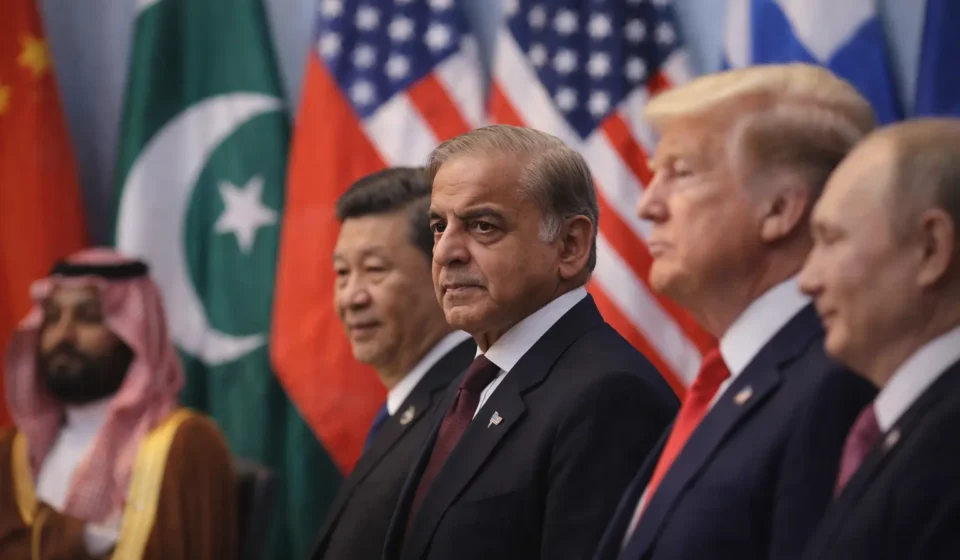

Pakistan’s geopolitical ascent marks a striking shift in global power dynamics. Once dismissed as a fragile state amid economic instability, Islamabad has re-emerged in 2025–2026 as a practitioner of sophisticated multi-alignment. This transformation challenges the long-standing thesis of ideological convergence under liberal democracy and instead signals what many scholars now call the “return of history”, a world shaped not by universal values, but by strategic necessity and power balancing.
This ascent reflects deliberate diplomacy that leverages geography, nuclear deterrence, and flexible partnerships. As multipolarity intensifies, Islamabad extracts benefits from competing powers without exclusive dependence.
Understanding the End of History
The intellectual foundation of this debate lies in Francis Fukuyama’s seminal work The End of History and the Last Man. Writing in the aftermath of the Cold War, Fukuyama argued that Western liberal democracy represented the final stage of ideological evolution.
Drawing from Hegelian dialectics and Marxist historical progression, he claimed no viable ideological rival could surpass liberal democracy’s political and economic model.
Throughout the 1990s and early 2000s, this thesis gained traction. Analysts across institutions echoed the belief that globalization and U.S. unipolar dominance would gradually universalize liberal norms. South Asia, particularly India, was expected to integrate into this trajectory as a democratic counterweight aligned with the West.
The Return of History and Multipolar Geopolitics
Events over the past two decades have decisively disrupted this narrative. The resurgence of great-power competition, the rise of China, and Russia’s reassertion have reintroduced geopolitical contestation. Analysts argue that unipolarity was not an endpoint, but a temporary phase. The concept of the “return of history” reflects this shift.
Rather than ideological convergence, states now pursue strategic autonomy, hedging between competing powers. Geography, resources, and military capability have regained central importance.
South Asia exemplifies this transformation. Intensifying U.S.–China rivalry accelerated the fragmentation of global order, creating space for states like Pakistan to operate with increased flexibility. BRICS expansion and shifting alliances further illustrate multipolarity, with emerging powers challenging traditional hierarchies.
Pakistan’s Geopolitical Ascent in a Multipolar World
Pakistan’s geopolitical rise in this environment is rooted in deliberate multi-vector diplomacy. Islamabad balances relations simultaneously with China, the United States, Russia, Saudi Arabia, Turkey, and Iran, prioritizing national interest over ideological alignment.
This approach has produced tangible outcomes. The China-Pakistan Economic Corridor (CPEC) continues to anchor ties with Beijing, with fresh Chinese investment agreements worth $1.5 billion and MoUs of $9 billion signed in early 2026, pushing potential inflows to $10 billion. Engagement with Washington revived through counterterrorism coordination and economic incentives. Relations with Moscow expanded via trade exceeding $1 billion and joint military exercises.
Pakistan’s geographic position at the intersection of South Asia, Central Asia, and the Middle East further enhances its leverage. Combined with nuclear deterrence and institutional coordination, this positioning allows Islamabad to operate as both participant and mediator.
Pakistan’s Multi-Vector Diplomacy with Great Powers
Pakistan’s engagement with major powers illustrates the mechanics of adaptability. Its partnership with China remains foundational, particularly in infrastructure and defense, with CPEC Phase-II shifting toward business-to-business industrialization.
Simultaneously, relations with the United States recalibrated around security cooperation. A key milestone was the unprecedented White House meeting between U.S. President Trump and Pakistan Army Chief Field Marshal Munir. With Russia, Pakistan explored energy cooperation and strategic connectivity, including discounted crude oil imports and naval exercises like Arabian Monsoon in 2025.
Key Achievements:
- Strategic Mutual Defense Agreement with Saudi Arabia in September 2025
- Defense and trade pacts with Turkey (24 agreements)
- Trade and energy deals with Iran.
According to a detailed analysis by Dawn, 2025 brought a surprising thaw in Pak-US ties, with Trump commending Pakistan’s role over 30 times during the May 2025 India-Pakistan clashes.
India’s Foreign Policy Failures Under Modi
In contrast, India’s recent trajectory illustrates the risks of strategic rigidity. Under Prime Minister Narendra Modi, foreign policy has increasingly reflected domestic political priorities, particularly majoritarian nationalism.
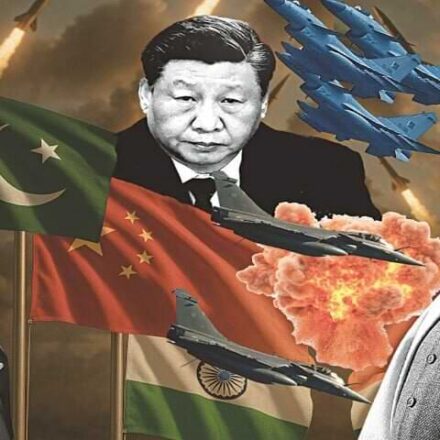
While India retains significant economic capabilities, its regional engagement has faced notable setbacks. Developments in Bangladesh following the fall of Hasina in 2024 weakened New Delhi’s influence. Tensions in Kashmir, including the April 2025 Pahalgam attack and subsequent military conflict, drew renewed international attention and strained U.S. ties through tariffs and narrative disputes.
Analysts note that India’s neo-Nehruvian “Neighbourhood First” policy has struggled not because of any external factors, but rather due to the hard Hindutva upheaval under Modi since 2014. The regional implication of this includes the ineffectiveness of initiatives such as SAARC. The divergence between India’s rigid posture and Pakistan’s flexible strategy highlights a broader lesson of multipolarity, which is, adaptability often outweighs scale.
Strategic Balancing During the Israel–US–Iran War
The escalation involving the United States, Israel, and Iran recently tested Pakistan’s diplomatic model. Islamabad adopted a carefully calibrated stance, condemning escalation while avoiding alignment with any single bloc. Through active diplomatic engagement, Pakistan positioned itself as a mediator, maintaining communication with both Gulf states and Tehran. It expressed support for Iran’s sovereignty while urging de-escalation.
Domestically, the state managed potential spillover effects through security vigilance and political restraint. This episode demonstrated the practical application of multi-vector diplomacy in crisis conditions, not merely as theory, but as operational strategy.
As reported in coverage of the conflict, Pakistan walked a fine line, preserving credibility across competing actors without compromising core interests.
Future Outlook for Pakistan and India
According to The Diplomat, 2025 marked the year Pakistan stepped back into the spotlight, with military performance and diplomacy restoring strategic credibility heading into 2026.
Looking ahead, Pakistan’s geopolitical importance suggests continued relevance in a multipolar system. Middle powers that successfully balance competing interests can achieve disproportionate influence.
Pakistan’s 2025 gains including the Saudi defense pact, U.S. reset, and CPEC momentum position it for greater global roles, such as potential contributions to Gaza stabilization. India, meanwhile, faces a strategic inflection point. Sustained regional influence will likely require recalibration toward greater flexibility and engagement, moving beyond ideological constraints.
Foreign Policy magazine described Pakistan’s diplomatic surge as a “tsunami of near-Kissingerian diplomacy,” including resets with the U.S. and pacts across the Middle East, all at India’s expense.
Challenges Ahead:
- Internal political unity for Pakistan to safeguard gains
- Economic stabilization amid global volatility
- Regional mistrust reduction for both nations
Conclusion: Embracing the Return of History
Pakistan’s geopolitical ascent reflects a deeper transformation in global order. The assumptions of ideological finality that defined the post-Cold War era no longer hold.
Instead, the return of history has reintroduced competition, pragmatism, and strategic fluidity. In this environment, Pakistan’s model, grounded in multi-alignment, geographic leverage, and calculated neutrality, offers a compelling case study.
As multipolarity deepens, states prioritizing adaptability will shape regional orders. Pakistan’s role and relevance underscore that history has not ended; it has returned with new opportunities for middle powers willing to navigate complexity.