



As Narendra Modi swept to power in 2014, he opened his foreign policy with a dramatic touch, by inviting the leaders of all the SAARC countries to attend his swearing-in ceremony. It was christened as Neighbourhood first, a policy that assured of anchoring south Asia on the basis of connectivity, goodwill and economic integration of India. A dozen years later that doctrine is in shambles. The neighbours are not growing distant they are racing towards Beijing, and New Delhi is sitting back and feeling confused and bankrupt in diplomacy.
A Region Reorienting Away From Delhi
The fact is incriminating and all over. Nepal, a nation that previously regarded India as its civilizational older brother, has shifted to the sphere of China resolutely. Kathmandu became a signatory to the Belt and Road Initiative of Beijing, and bilateral relations between the two countries have been constantly vitiated by the borders, fuel blockades, and the attitude of New Delhi which treats Nepal as its vassal and not as an independent state. With its coercive policy towards its neighbours, India has always failed in its bid to control and manipulate its neighbours, As analysts at the Council on Foreign Relations have noted, which has driven smaller states to the bosom of the same rival that India loathes most of all.
Bangladesh, which was assumed to be the most faithful ally of India in the area, experienced a seismic political uprising in 2024 when Sheikh Hasina the nearest regional ally of New Delhi was compelled out of power. The interim government in Dhaka has since been able to readjust its foreign policy by being quite cool to India. The issue of trade conflicts, the water-sharing stalemate in Teesta river as well as the perceived arrogance of India over Bangladeshi sovereignty has eaten up what used to be an exemplary bilateral relationship. The Diplomat has documented the failure of India to fulfill its economic promises has provided China with the window it liked to enhance its infrastructural investments in Bangladesh.
The Maldives and Sri Lanka: China’s New Beachheads
The strategic humiliation of India, perhaps, is more apparent in the Maldives. With the rise to power of President Mohamed Muizzu on an openly anti-India platform, insisting on the removal of Indian military personnel, the government of Modi scrambled to respond and did not find any. It was a lesson in bad management of a smaller neighbour that decades of perceived Indian intrusion had left enough bitterness that a populist politician could be elected on the basis of running against New Delhi.
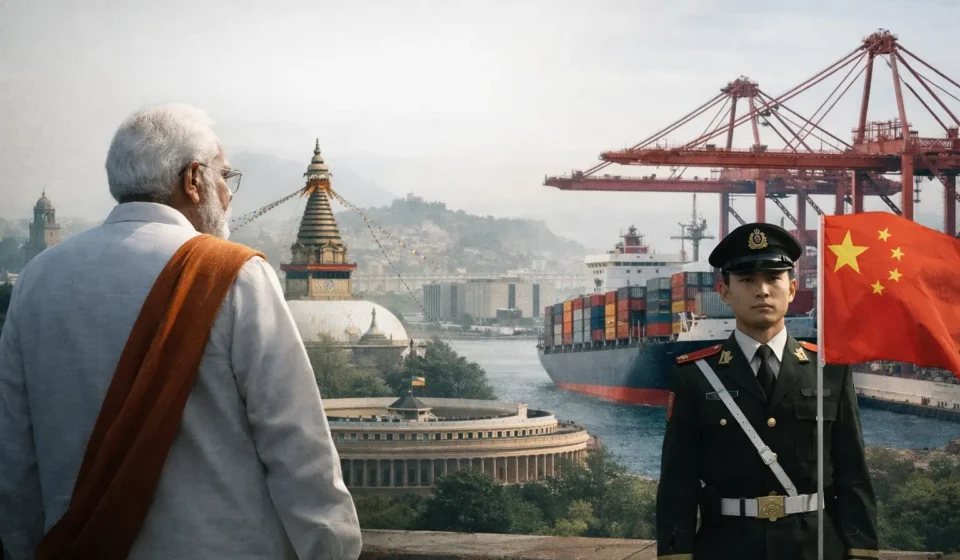
Sri Lanka can say much the same thing, but with more intricacy. Colombo has gone ahead to approve Chinese port infrastructure at Hambantota, which according to strategic analysts, is a potential dual-use facility in what is described as the most sensitive maritime backyard in India. Although the Modi government has been providing loans and disaster aid in the economic crisis in Sri Lanka, the structural involvement that would have integrated Colombo in an India-centric orbit, was never established. India talks; China builds. That opposition has turned into the geopolitical nature of South Asian territory.
Modi’s Foreign Policy: Optics Without Strategy
The fundamental flaw in the foreign policy of the region by Modi is that it is based on performance more than substance. The theatrics of diplomacy the bear hugs, the stadium rallies to audiences of the diaspora, the pompous imagery of bilateral summits, is the prime minister, who is supremely gifted in the theatrics of diplomacy. What his government has been unable to consistently provide is the tedious, meatless task of regional integration: concluding trade agreements, ending river water wars, making borders open to goods and people, and to treat neighbours as partners, not as security dilemmas which have to be resolved.
The strategy of China, in turn, is mercilessly transactional and has vast resources. The Beijing has invested billions of dollars on ports, roads, railways and power stations in South Asia through the Belt and Road Initiative. These are not presents that are accompanied by strings, debts, and strategic leverage. However they are tangible, visible and politically convenient to recipient governments. At least Foreign Policy magazine has argued put forth that it is not only a lack of resources but also a lack of strategy just in terms of imagination that India is not able to keep up with Chinese infrastructure diplomacy as per the current government.
Pakistan: The Obsession That Distorts Everything
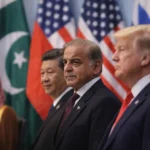
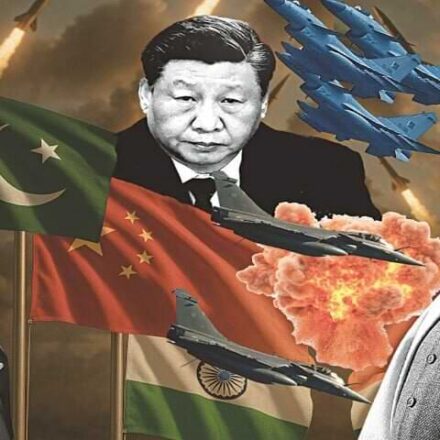
The Pakistan fixation cannot be discussed in terms of the failures going on in India region. The government of Modi has permitted the bilateral relation with Islamabad to fail completely which may be arguably on national security grounds but it has cost India dearly in terms of credibility in the region. The regional block, SAARC, which India is supposed to be leading on, has been successfully handcuffed over the last ten years due to the refusal of New Delhi to involve itself in any form of forum that involves Pakistan. The outcome is both a lack of functioning regional multilateral platform in India, and the Chinese progressing through bilateral agreements that entirely circumvent India.
In 2019, when India repealed Article 370 in Jammu & Kashmir, the move sparked uproar in the region, though it was a popular move at home. Smaller South Asian states that were already anxious of the size and strength of India observed New Delhi simply marking its constitutional map unilaterally and came to their conclusion with regards to the credibility of Indian promises to sovereignty and international standards.
The Cost of a Decade of Strategic Drift
India is not powerless. It is by far the biggest economy in South Asia by a massive margin, the strongest military force in the area and a nation that has very strong civilisational, cultural and people to people relationships with all its neighbours. The tragedy of the Modi years is that these structural benefits have been wasted by a mixture of hubris, a lack of strategic coherence and a foreign policy apparatus that is too subservient to domestic political message to serve in an effective manner. India has developed its neighbourhood policy to be reactive instead of proactive, which responds to crises instead of influencing the regional environment, as has been Carnegie Endowment scholars have observed.
China is not defeating South Asia due to its greater might than India. It is emerging as the winner since it presents up with cash, with infrastructures, with diligent presence as India gives step in the wrong directions, with informal economic coerciveness to smaller neighbours and with regional supremacy and not the true leaders. A neighbouring country with whom the others are afraid but distrustful, on whom they are indebted but dislike, is no regional power. It is a regional problem.
Neighbourhood First was never a strategy, but a slogan. The neighbourhood will continue to be lost unless India can generate a government irrespective of which party that takes the South Asian foreign policy with seriousness, resource and long term thinking that it requires. And China will keep building.