

Hubris and Hypersonics: How Operation Bunyan ul Marsoos Redrew the Geopolitical Map of South Asia

The traces of haughty nations that were swallowing their own propaganda are scattered all over history. In the eyes of the Indian army and political set-up, the spring of 2025 was the era when their supreme geopolitical feat would be showcased. Through a meticulously organized blend of false-flag operations, hydro warfare, and unprovoked military strikes, New Delhi had a plan that by completely isolating Pakistan, it would be dominating South Asia without any contest.
Instead, they collided with a wall of lead.
One year later, as we reflect from the vantage point of May 2026, the legacy of Pakistan’s Operation Bunyan ul Marsoos stands as a masterclass in strategic restraint followed by absolute kinetic deterrence. Not only did Pakistan shatter the multi-billion-dollar myth of Indian aerial invincibility, but it also utilized its hard-won leverage to transform Islamabad into the diplomatic anchor of the Middle East.
Here is how the 18 days of May 2025 permanently altered the global world order.
The Pahalgam False Flag: A Pre-Written Script
Every unjust war requires a manufactured casus belli. On April 22, 2025, an attack in the picturesque Baisaran Valley of Pahalgam left 26 people dead. The tragedy was immediately hijacked by the Indian state media, which pointed fingers at Pakistan before the blood in the meadow had even dried.
However, the narrative collapsed almost instantly under international scrutiny. Independent analysts pointed out nine glaring loopholes that screamed of a staged false flag.
First of all, the geography was a complete mismatch. Baisaran is a heavily militarized zone and is just about one kilometer away from an Indian Army camp with around 3,000 soldiers. Getting there by foot takes a hard 45-minute climb. On the other hand, it was really surprising a regular police FIR blaming Pakistan was recorded at 3:07 PM – only seven minutes after the attack began, long before the security forces had reached that isolated crime scene.
The evidence was totally fabricated. A heartbreaking viral video of a “Navy Officer” dying and his wife, stirred up hyper-nationalist passion all over India, was just a stolen vacation video from April 14. The couple was fine and healthy. Besides, the terrorist outfit TRF’s first “confession” was found out to be a fake one created by Indian intelligence hackers, exposing them beyond doubt with digital evidence.
The timing could not have been better. The terrorist attack matched precisely the visit of U.S. Vice President JD Vance to New Delhi and the forthcoming state elections in Bihar. In fact, rather than carrying out a forensic investigation, the Indian authorities decided to “clean” the population by demographics. More than 1,100 Kashmiri youths were taken away in midnight raids, while the homes of 6,500 people in Gujarat were destroyed. Over ninety percent of those arrested were Indian nationals who, in order to facilitate the land acquisitions, were termed “outsiders”.
Weaponizing Water and Midnight Cowardice
After the international community rejected the Pahalgam script, India went a step further from propaganda to committing war crimes. On April 24, New Delhi, without consulting other parties, decided to suspend the Indus Water Treaty of 1960. This was not a military action; it was a hydro-warfare act. By controlling the rivers, India tried to use scarcity of water as a weapon of mass submission for millions of Pakistani farmers, mothers, and children.
Pakistan exercised immense strategic restraint, demanding neutral international probes. Interpreting this maturity as weakness, India crossed the ultimate red line.
At 1:05 AM on May 7, India launched “Operation Sindoor.” Under the veil of night, a barrage of unprovoked missiles was unleashed on the sleeping residential areas of Azad Kashmir and Punjab. The loss was devastating: 51 innocent Pakistani civilians lost their lives, and many others got injured and buried under the debris. India was under the impression that its recently procured arms had made it untouchable.
They were about to learn a very painful lesson.
Operation Bunyan ul Marsoos: The Wall of Lead
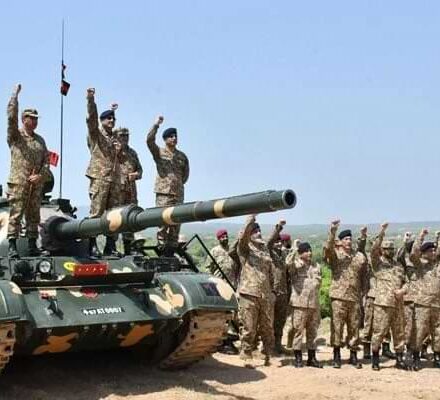
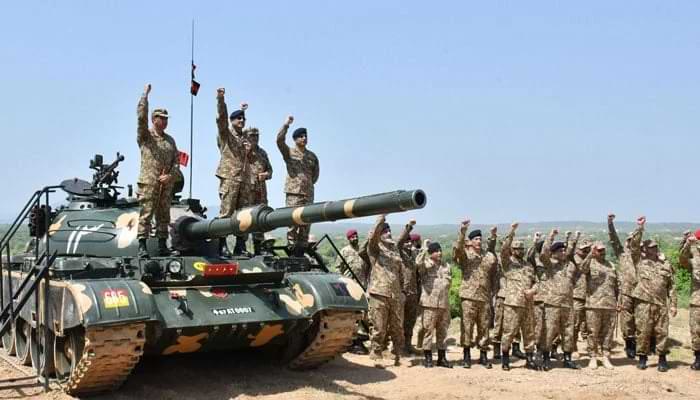
On May 10, invoking Article 51 of the UN Charter (the right to self-defense), the Pakistan Armed Forces launched Operation Bunyan ul Marsoos. The name, derived from the Quran, translates to “A solid, cemented structure” or “A wall of lead.”
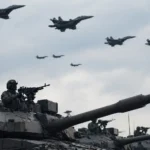
That was precision warfare at its best. Instead of causing havoc among civilians, Pakistan methodically broke down the Indian military. Right away, Pakistan’s various aircraft including JF-17 Block III, J-10C squadrons as well as locally made Fatah-1 and Fatah-2 guided rockets managed to get through India’s highly protected defense systems worth billions of dollars.
The strategic humiliation was absolute. Pakistan Air Force hypersonic missiles completely destroyed the highly reputed and very expensive, $1.5 billion, Russian S-400 radar system at Adampur airbase. That’s not all. The storage sites of the strategically important BrahMos missile in Beas and Nagrota were totally wiped out. Major logistics headquarters and airbases in Pathankot and Udhampur were hit with spot-on accuracy.
Simultaneously, a devastating Pakistani cyber counteroffensive paralyzed 70% of India’s power grid, plunging the Maharashtrian defense networks into complete darkness and rendering their command-and-control centers useless.
The Fall of the Rafales and Global Validation
In a desperate panic, the Indian Air Force scrambled its prized, billion-dollar French Rafale jets. The Indian media had spent years dubbing these aircraft “invincible game-changers.”
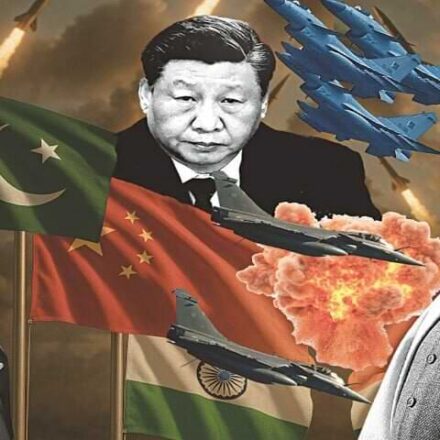
However, what was actually happening in the skies was quite the opposite. Pakistani pilots with their incredible use of electronic warfare techniques and aerial dominance managed to outsmart the IAF. The official figures that Pakistan has released state that it shot down 6 Indian Air Force fighter jets – 3 of these were Rafales – and also destroyed a number of military drones. This spectacle of burning Rafale aircraft really put an end to the notion of Indian aerial dominance.
The defeat was so absolute that it affected the whole world stage of geopolitics. For the first time ever, US President Donald Trump endorsed Pakistan’s official story in public through his social media posts, directly verifying the accuracy of Pakistani response and acknowledging the shooting down of the Indian jets. Without any diplomatic or military protection, it was the Indian Director General of Military Operations (DGMO) who frantically initiated a hotline call by sunrise, begging for a ceasefire.
From Target to Peacemaker: The New Islamabad
Military deterrence is the currency that buys diplomatic respect. The ultimate victory of Operation Bunyan ul Marsoos was not just kinetic; it was geopolitical.
An event arranged by New Delhi to completely cut off Pakistan diplomatically ironically made Pakistan the main diplomatic center in the region. Pakistan with its unprecedented strategic advantages, incontestable moral superiority, and internationally recognized military strength, transcended its regional disputes.
Today, in 2026, we are witnessing the fruits of that deterrence. Islamabad is currently utilizing its immense geopolitical capital to host historic peace talks between the United States and Iran, mediating a conflict that threatened global stability. Pakistan is no longer viewed merely through the lens of South Asian conflicts; it is recognized as a primary stabilizer of the broader Middle East.
A military invasion based on cyber-hacked social media posts, stolen holiday videos, and weaponized rivers is an ultimately fatal strategic mistake. Pakistan’s fitting response showed that a bullying neighbour cannot set the rules of a war when confronted with an absolute, technologically superior wall of lead. The Baisaran meadow was supposed to be the reason that Pakistan be destroyed. However, it created a new, undeniable fact: Pakistan is a fortress, and its resolve is unbreakable.