

Prime Minister Narendra Modi’s latest trip to Norway has once again brought up globally the issue of freedom of press, democratic accountability and the limited scope of independent journalism in India. Instead of a normal diplomatic engagement, it turned to symbolize the bigger and uncomfortable question: can a democracy operate well when even its highest political leadership constantly resists media scrutiny without a prior script?
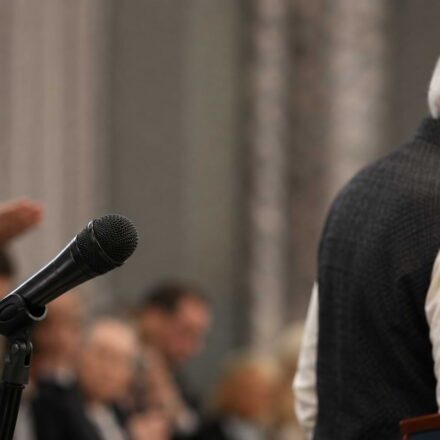
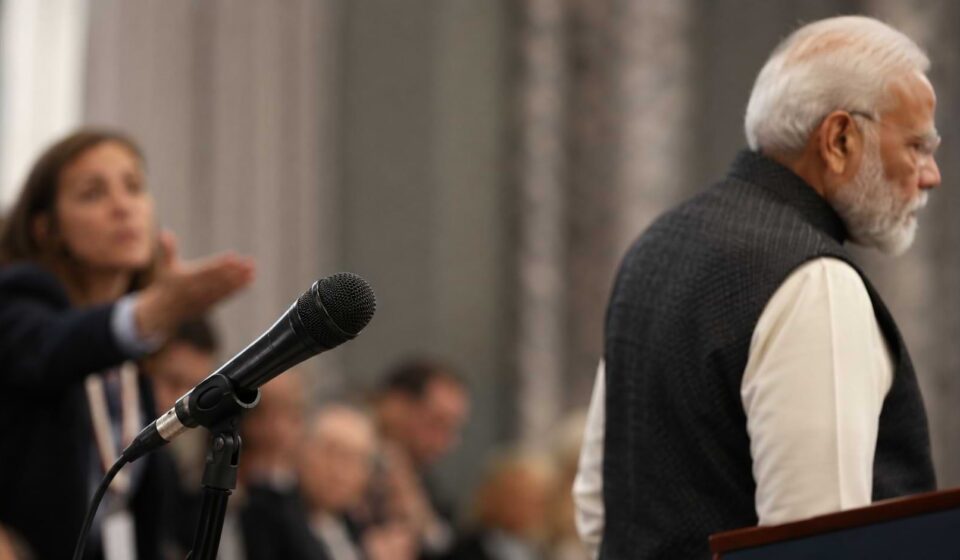
The issue arose when the Norwegian journalist Helle Lyng Svendsen challenged Modi during a press conference in Oslo, asking why he refused to take questions from “the freest press in the world.” Without answering, Modi went off. Later Still, when the same journalist was questioning the India Ministry of External Affair Secretary (West) Sibi George about the record of India’s human rights, the situation became tense and defensive. Not confronting the questions of minority rights, press freedom and democratic backsliding directly, the Indian diplomat started talking about India’s civilizational history yoga chess and vaccine diplomacy. After being interrupted and pressed again for a clearer answer on human rights issues, the official showed anger.
The moment very quickly spread virally at a global level as it was a reflection of a widespread perception that India’s political leaders are turning more and more to a stance in which they are unwilling to be challenged, Mostly through questions about democracy, minority rights or media freedom.
The Fact that needs to be Heard
The Last Press Conference of Narendra Modi Was Held Twelve Years Ago Among the various facets of the criticism, one stands out very clearly – Narendra Modi has not been holding a press conference even once during the entire twelve years that he has been the Prime Minister of India. As reports, he still continues to deliver speeches at rallies, take part in radio programs and give pre-arranged interviews, while interactions with the media in an open way where reporters have the possibility to ask follow-up questions without any restrictions have been practically non-existent.
This is In particular so, since in countries known for their governance based on electoral representation, the holding of a press conference is not only a gesture of symbolism, rather it is the working tool through which the exercise of checks and balances take place. Besides, leaders are also supposed to willingly expose themselves to the discomfort of answering close questioning since that is what lies at the heart of public scrutiny, which is indispensable to a really working system of democracy.
Opponents of the government maintain that the steady refusal to submit oneself to a reporter practically on-the-spot clearly indicates that Modi’s line of thought is not one of gaining more political support or becoming more vocal and assertive, rather it is one of seeking more protection from a political point of view. Even at times of foreign trips, portions of time when journalists can pose questions directly to the Indian Prime Minister remain few and are heavily regulated.
In fact, the difference was so well marked in Norway, a country that with its many freedoms including that of the press is counted a lot among the most free countries in the world, where the attitude of the media toward not only reporting the truth but also to openly challenging the authorities is one of the characteristics of the society that has been ingrained in the people by the functioning of the very system of democracy for so long that it has become second nature to them.
India’s Falling Press Freedom Rankings
This incident has also highlighted the downward trend of India’s press freedom amongst the world’s rankings. India is supposedly 157th out of 180 countries in the 2023 World Press Freedom Index which surprises a lot as India is frequently referring itself as the world’s largest democracy.
Media rights organizations and supporters of the press freedom have time and again raised alarm about the increase of restrictions on independent journalism in India. Many reporters talk about self-censorship out of fear of legal cases, tax raids, social media bullying and political victimization. Top journalists, Mainly women and minority reporters, have encountered a well-planned online attack after putting the government officials to tough interrogations.
Nationalism as a Cover-Up
The Norway episode has been a trigger for another great objection – using nationalism and civilizing discourse to sidestep examination. Officials often shift focus away from rights abuses or weakening democracy by praising India’s ancient history, global contributions, or economic growth.
A strong democracy is one where not only praise but also criticisms are welcomed. It is the presence of institutions that challenge power openly and independently which sustains the democratic culture. Journalism under Pressure.
Following the incident, the kind of reaction received by the Norwegian journalist Helle Lyng Svendsen exposes the very hostile atmosphere that surrounds the critical journalism dealing with India. She too, like several other journalists before her, was reportedly subjected to trolling, online abuses and allegations about her intentions merely for raising questions. This is the way things are now. Journalists who query the government on issues related to minority rights, communal violence Kashmir Manipur or the lack of freedom of the press are often the ones who face aggressive online slandering. But it is more than just the individual reporter being intimidated. It is the very concept of independent journalism gradually becoming something hostile that worries us.
Beyond Global Image
In Today’s world India sees itself a leader that can distate the world but this needs fisrst to set an example within its own borders, in case tech superiority or diplomacy on global stage, however the Norway incident says the opposite. The strength of a democracy is not measured by its capacity to dominate narratives, but by its readiness to let those narratives be examined and challenged. The concerns voiced in Norway are That means not limited to one journalist or one press conference. They are an expression of deep-seated worries about the possible weakening of India’s democratic institutions, In particular a free and independent press, under the increasing political centralization.
If India really desires to realize its global role, then the dilemma for its leaders is quite evident: it is true that economic strength and international relations can give a country a better image worldwide Yet it is transparency, accountability and the freedom to raise hard questions that underpin democratic legitimacy.