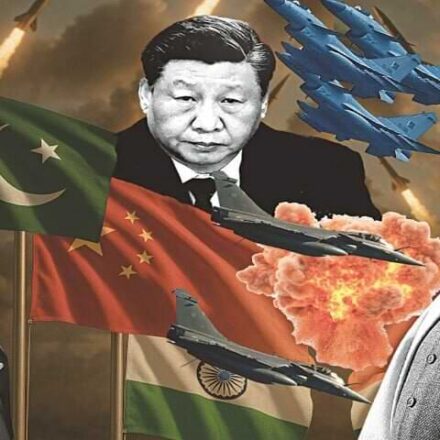



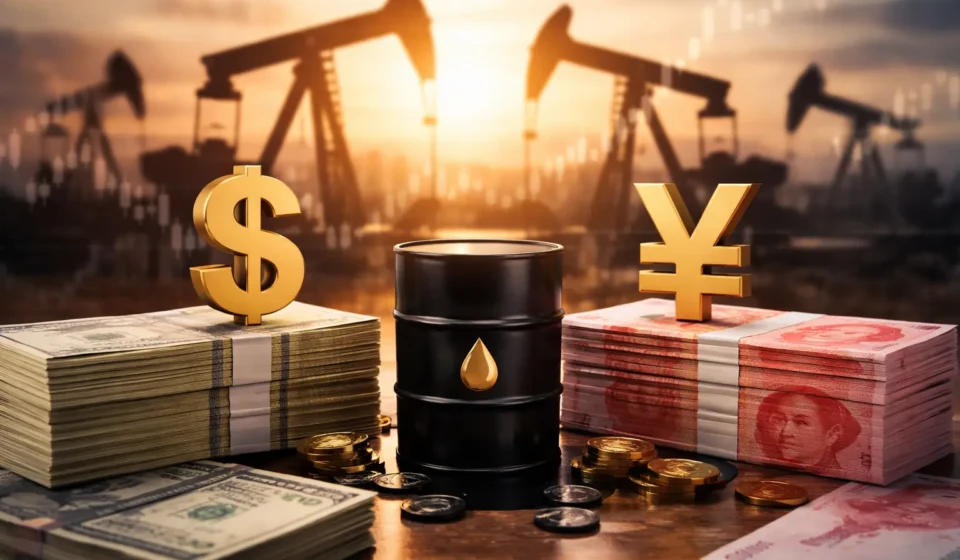

“Since more than 5 decades, the US dollar is the sole sovereign of the energy markets all over the world. However, the crown is becoming less solid in 2026”
Table Of Content
The Petrodollar- A System Built on Cold War Arithmetic
It was not by chance that the petrodollar system came about it was designed. After the Nixon Shock of 1971, when the gold convertibility of the dollar was abolished, the US and Saudi Arabia established a security-for-currency agreement: Saudi Arabia would only sell its oil in US dollars and recycle those excesses in American Treasuries, in return the US guaranteed total security. This arrangement was considered so sensitive that it was not disclosed until 2016.
This agreement alone transformed the whole financial system in the world. All countries that required oil that is, all countries were compelled to stock dollar reserves. It provided an unprecedented leverage to Washington: the power to issue sanctions, control the world trade policy, and even print money which had to be neutralized by the world. It functioned perfectly in 50 years.
China’s Long Game
China did not go against this system by sheerforce. It was a waiting, mechanical game. China initiated the start of a long-term plan to internationalise the usage of the yuan by launching futures contracts in yuan in March 2018.
The timing was deliberate. China was already the largest importer of crude oil in the world providing it with enormous purchasing power. Being able to offer sellers a chance to settle the price in yuan rather than in dollars Beijing has developed an option that can be used by energy sellers who are tired of the dominant position of the US in the financial arena. By January 2025, other countries such as Russia, Iran, Venezuela, Saudi Arabia, UAE, and Egypt, are some of those utilizing the petroyuan in one way or another.
The Numbers That Tell the Real Story
Ideology is not the greatest argument in favor of the petroyuan but data is. The dollar share ahead in the world reserves has since gone down in the period between the years 2008 and 2011; the central banks have purchased more than 1,000 metric tons of gold in the last three years. It has also been reducing its US Treasury holdings by more than 1.3 trillion in 2013 to only 682 billion by November 2025, and has expanded trade in yuan throughout Asia.
The figures are even higher on the digital infrastructure front. As of November 2025 the mBridge platform a BRICS supported cross-border digital currency settlement system had already settled more than 55.5 billion in transactions, of which 95 percent were comprised by the digital yuan. This platform enables the Gulf states such as the UAE and Saudi Arabia to trade energy with the Asian region without involvement into dollar-based systems at all.
In 2025, Russia-China energy trade had reached about 55 percent yuan settlement. Meanwhile, BRICS countries, whose grouping together controls about 37 percent of the up-and-coming market fuel business, have been progressively assembling payment platforms, currency swap, and trade financing frameworks that are destined to operate with the Washington financial tracks.
The Strait of Hormuz-A Watershed Moment in March 2026
The Strait of Hormuz crisis is perhaps what has made the petroyuan threat become tangible in 2026. The Strait manages about 20 million barrels of oil per day as well as 20 per cent of overall worldwide liquid natural gas trade.The March 2026 offer by Iran to base Strait of Hormuz passage on settlement in yen, is one of the most significant financial offers offered in the post-Bretton Woods era, not necessarily a strategy game by a sanctioned state, but the deployment of an existing financial structure.
This architecture was being constructed by China over the years. According to the Wall Street Journal in late 2025, China came up with a secret financial system which was internally referred to as Chuxin that enabled the making of payments to Iran in yuan to purchase oil without using the US banking system. China was buying about 90% of Iranian oil exports, worth more than 8 billion dollars per year, all in this non-dollar system by the first part of 2026.
Saudi Arabia: The Swing Vote in Currency History
Perhaps, it is the Strait of Hormuz crisis that has rendered the threat posed by the petroyuan a reality in 2026. The Strait handles approximately 20 million barrels of oil daily and 20 per cent of total global natural gas liquid trade.
The Iranian offer of March 2026 to peg Strait of Hormuz passage on settlement in yen, is the largest financial offer ever made in the post-Bretton Woods game, not necessarily one played on a strategy board, but the use of an already existing financial structure.
China was building this architecture during the years. In late 2025, the Wall Street Journal reported that China had devised a hidden financial system that was also known internally as Chuxin that it could use to make payments to Iran in yuan to buy oil without utilizing the US banking system. The first part of 2026 was purchasing 90 percent of the Iranian oil exports (valued over 8 billion dollars annually) in this non-dollar system.
Can the Dollar Survive? What the Experts Say
The appreciation of petroyuan is factual, but the pronouncement of the death of the dollar is still too early. US financial system still boasts of unparalleled depth, liquidity and institutional trust. The default situation is that most contracts, commodities, and sovereign debt in the world are still dollar-dominated.
The structural soundness of the dollar, and the extent of dollar-denominated financial markets, and the institutional inertia of a global financial system constructed upon dollar settlement all guarantee that any shift that might happen will be measured not in months but decades.
A more plausible scenario is a split global energy market the one in which the petrodollar and petroyuan are coexisting as competing regimes and are dividing the world based on the geopolitical fault lines. Those countries that are aligned to the west pay in dollars; those countries that are close to China pay in yuan. Such disaggregation comes with its own titanic dangers: market distortions, a decline in market transparency and an increase in the polarisation of geopolitics.
Conclusion
The petrodollar is not plunging but no longer indisputed. The petroyuan is becoming reality not merely in theory but through the support of digital payment infrastructure, sanctions-busting capabilities, and the mere gravity of the energy demand of China.
Whether or not the dollar will lose its footing in oil trading in 2026 and beyond is the real question, but how quickly and whether Washington will upgrade its financial infrastructure before the alternative systems are too firmly established to be reversed is the question.