



From the time of birth, India was known to have multiple identities, cultures and religions. It has been known because of its diversity. In recent years that phenomena has been weakened to the extent that it has totally eroded the secular fabric of India. The rising extremism is now a major problem that has no solution so far. It is not just on the fringes but in the mainstream.
This has not happened overnight. People’s attitudes have become harder due to increased extremism specially promoted by political parties for instance BJP, following the footsteps of RSS. Hate politics has also been normalized diving people in the basis of ethnicity and religion.
The Expanding Footprint of Hate
As per the reports, Hate crimes, in India has been extensively increased particularly against minorities in the past decade. For instance between 2014 and 2023 cases of mob lynching and targeted violence against minorities have witnessed a great surge.
Many of these were linked to cow vigilantism interfaith relationships and accusations of conversion.
A report said that over 90% of cow-related violence incidents happened after 2014. Most of the victims were from communities. These numbers are not just statistics. They are lives that have been disrupted. They are families that have been broken. They are communities that have been pushed into fear.
Radicalization Beyond the Margins
Extremism in India today is not just limited to groups. It is visible in normal practices. Even in rallies television debates and digital platforms, leaders are promoting one group over other. This has become a normal pattern in India as the marginalization of minority communities has been a tool to gain electoral advantage, sympathy and political dominance. This way, the language of exclusion has become legitimate.
For this, social media has become a major tool. Hate has been spread against minorities particularly Muslims and Christians for political gains. It is flooded with content that inflames, conspiracy theories and misinformation campaigns. India is among the countries globally in terms of internet shutdowns. Many of these shutdowns happen during periods of unrest. This limits access to information. Today, the line in rhetoric and extremist ideology has become blurry. Such Statements that were criticized and sparked outrage now pass with resistance without notice. This contributes to a steady normalization of intolerance.
Communal Fault Lines Deepen
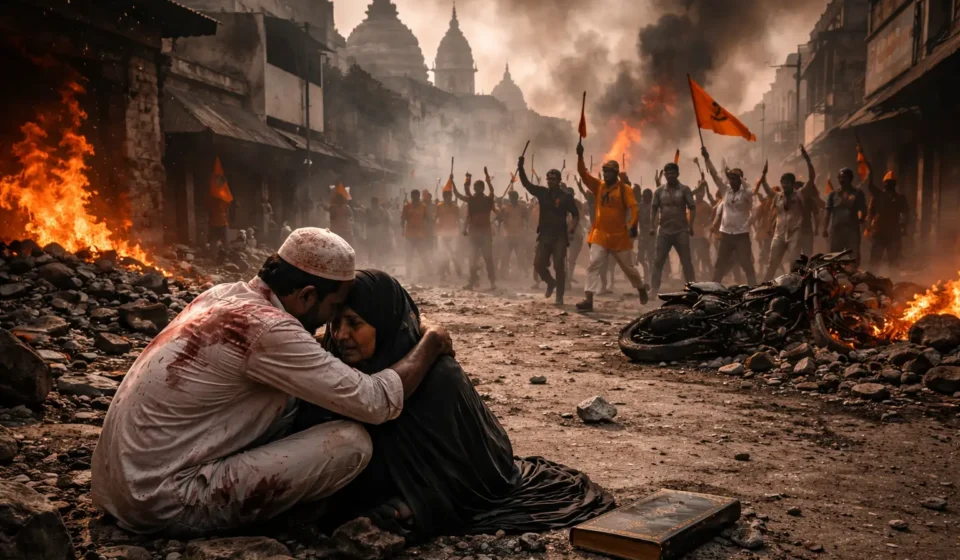
The problem of rising extremism is the change in the way communities are drifting apart. Neighborhoods where people used to come to celebrate festivals and traditions are now split. When trust is broken it is very hard to fix. States for instance Uttar Pradesh, and Delhi are known for increased communal violence against minorities. Although these are well developed ststes the incidents in February 2020 in Delhi were unforgettable in which mo0re than fifty people killed and hundreds were injured mostly from minority communities.
Many homes, shops and places of worship were destroyed. Rising extremism is a problem that is causing the losses. Communities are suffering because of rising extremism whose scars remain for years.
The Role of Silence and Complicity
The troubling aspect of this rise is not just the extremism itself but the response to it. In instances there has been a lack of accountability. Cases drag on in courts. Investigations stall. Perpetrators often walk free. Face minimal consequences.
This perceived impunity sends a message. It says that certain forms of violence are tolerated. It emboldens elements. It discourages victims from seeking justice.
At the time voices that challenge this trend face increasing pressure. Voices in India have been suppressed as journalists’ activists and academics are getting arrested for siding with the truth and raising their voices. They are not being allowed to do their work. Organizations like Amnesty International are pointing about how things are getting tough in India. They have indicated several times that in India people needs to side by the majority community if they want to live.
Economic and Social Consequence
Extremism cost adoption against social and humanitarian values. In India, investors are wary of instability and tourism has declined in conflict- areas where local businesses also suffer due to the division of communities.
Youth in India find themselves at a crossroads. With unemployment rates in India hovering around 7–8% higher in certain regions frustration becomes fertile ground for radicalization. When combined with identity-based narratives this frustration can be easily redirected into anger against “the other” of becoming agents of innovation and growth young people risk being drawn into cycles of hate and violence.
The Global Warning
Due to all the happenings, one of the consequence is India on the Global stage has lost its image as a democratic secular state. Experts have warned India’s danger that is not just in acts of violence but in the gradual acceptance of those acts as normal.
The warning signs are clear. A society that tolerates extremism in small doses risks being consumed by it over time which has happened to India. India stands at a juncture of extremism for now. The path it chooses or carry forward will determine whether it will improve from the deepest era of extremism or moves further toward division by totally demolishing its own secular values.