The Strait Gamble: Power Politics, Provocation, and the Fragile Balance in US-Iran Relations

The recent flare-up in US-Iran tensions, highlighted by Donald J. Trump’s explosive threat to “open the Strait” or suffer “fiery consequences, ” politics to the other side of the world as a risky bet at the crossroads of image for their own domestic audience, power politics, global energy security, and strategic signaling. Iran’s quick rejection of Trump as “the unstable, delusional figure” is not just a diplomatic crisis. It is also a deeper structural conflict in which both sides are pushing each other in a very limited strategic space.
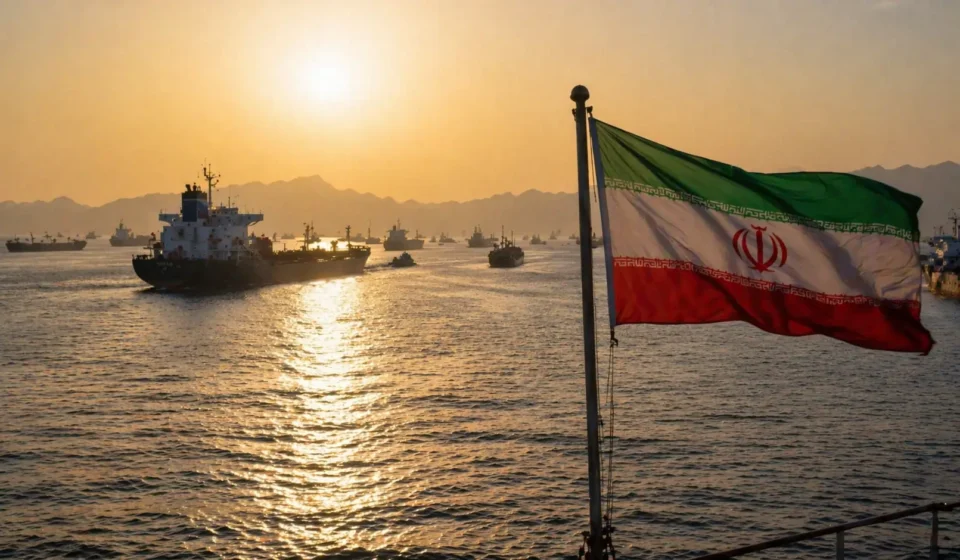
At the heart of this crisis lies the Strait of Hormuz, a narrow maritime chokepoint through which nearly one-fifth of global oil supply flows. (CGTN News) Its disturbance results in not only immediate but also long-running changes in the world markets, bringing about price shocks, hikes in insurance, and worries related to the rise and spread of power among the countries. Iran’s capability of limiting or governing the passage through the strait has made it possible to turn the mere fact of the topography to their advantage. As the latest happenings indicate, Iran is no longer just warning about the closure of the straitit is deliberately and selectively limiting access by setting up a ‘permission-based transit’ system which even the US-allied countries have to deal with practically. (Al Jazeera)
Trump’s reaction with the threat to launch strikes on Iranian power plants and bridges reveals his change of strategy from deterrence to aggressive coercive brinkmanship. His language, full of swear words and extreme final demands, is a complete break from traditional diplomatic language and represents a method of escalation dominance: the faith that making extremely threatening statements will force the opponent to give in. This kind of tactic however has great risks. Some experts and politicians have pointed out that attacks on civilian infrastructure might be considered violations of international law, and they even warned that they might lead to war crimes and that they would result in a worldwide rejection of the US. (The Washington Post)
Even more importantly, Trump’s threats could be misinterpreting the strategic thinking in Tehran. Iran’s reaction was not gentle nor reactive; it was measured defiance. Iranian officials, by interpreting US rhetoric as desperation, are actually demonstrating that they feel strong owing to their asymmetric advantages: location, network of regional allies, and capability of inflicting economic harm without getting into a direct conventional fight. (Al Jazeera) This reflects a broader Iranian doctrine: avoid direct war, but make conflict prohibitively expensive for the adversary.
The new facts of the crisis also show that it is not the same objective for the parties concerned. For the US, the Strait of Hormuz is not only a great economic need but also a huge political issue they have to deal with especially when domestic fuel prices are rising. (Pakistan Today) Tehran, on the other hand, views the strait as more than just a transit route – for them, it is a bargaining chip, a deterrent and a symbol of sovereignty. This difference leads to a zero-sum situation where both sides agree that compromise is not politically affordable.
The situation is complicated even more by the conflict expanding over the wider range of issues. According to some sources, the dispute has not remained one-to-one tension but has turned into a regi-onal war. It is evidenced by the launching of missiles, air combats as well as hostilities on several fronts by the states inv-olved in the neighborhood. (The Economic Times) Such diffusion would result in a higher probability of miscalculations when for example, a localized incident might induce a disproportionate escalation. Besides, in this sort of environment, propaganda is not only figurative but, to an extent, it is the very thing that determines the military postures and decision-making timelines.
One more aspect of Trump’s communication style that makes crisis management more difficult is his public threats, which are mostly sent through social networks and they are mixing in a provoking way the messages of signaling and even escalating. Their purpose was to portray strength though; however, these threats can possibly make the strategic ambiguity, which is a vital factor for deterrence effectiveness, lessened and put both sides in a situation of having to take inflexible stances. Besides that, Iran’s top officials would be unable to downplay the issue, on the contrary, after they are confronted with the foreign pressure, their domestic support and their standing in the region would be at risk.
The international reaction to the escalation has been very cautious, quite restrained in fact. Many of the US’s main allies are hesitating to inject military forces into the strait situation. Some of them are even considering direct talks with Iran as a way of ensuring the safety and availability of the passage.. (Al Jazeera) This is part of a wider breakdown of the international system, where the use of one-side-only tactic by the US will not automatically force the others to follow the path of the coalition. At the same time, this also draws attention to a fundamental fact: solely reliance on the military could not regain trust in the international energy markets. According to one of the analysts, the issue in Hormuz is equally a matter of perception and trust rather than just physical presence. (Al Jazeera)
After all, “The Strait Gamble” is basically a metaphor for such a paradox. On their part, the United States and Iran are both trying to show that they are strong however altogether, their actions are weakening stability. Trump’s actions are getting us in a bigger trouble line; he might even use the US in a long-time war without clear results. Iran is acting defiantly; in fact, it fits their strategy.
However, It may get the US to start a bigger fight that would physically destroying the nearby areas. The delicacy of US-Iran relations depends on neither military strength nor the arsenal possession, but rather, on the wisdom to refrain from using power that unfortunately is running out these days. If there is no change in the direction of said diplomacy that is in some sense better observed, the outcome predicted by the current events is deepening division, and with every attempt of gaining control over the Strait of Hormuz, the chances of the region’s heading to a systemic crisis become bigger. In this human drama that is being played right now, a much bigger question that who controls the strait is whether they would be able to withdraw to some extent before it is too late and the gamble becomes irreversible.