



Among Indian states, Assam is turning out to be a chilling experiment of a new kind of governance blending “Hindutva and welfare”. Under Chief Minister Himanta Biswa Sarma’s leadership BJP has devised a plan to combine harsh, majoritarian social engineering with a service brand of transactional welfare. In the run-up to 2026 state assembly elections, this “Assam Model” brings forth a frightening truth: the state is adeptly using cash handouts to secure the silencer even the complicity of the electorate while, on the other hand, gradually eroding the rights of its biggest minority.
The Mathematics of Marginalization
The primary focus of BJP’s plan is the marginalization of Assam’s Bengali-speaking Muslim community. Making up about 9 million out of the state’s 31 million people (based on the 2011 census), these people form 34% of the population Assam has the highest concentration of Muslims among all Indian states. Rather than seeking their integration, Sarma has weaponized their identity for electoral gain.
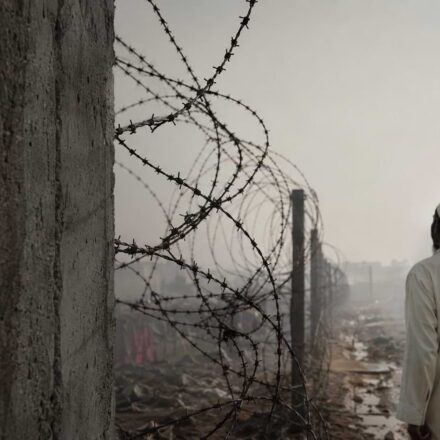
The rhetoric is backed by state force. Starting in 2021, authorities began large-scale removals of people from land they occupied, seizing about 20,000 hectares – close to four times bigger than Manhattan. Though officials claim it’s just about removing illegal settlements, evidence suggests otherwise. Reports from The New Humanitarian show that more than 22,000 buildings came down and 20,380 households lost their homes between mid-2021 and early 2026. Most hit hardest? Families who speak Bengali and follow Islam, often labeled with the dismissive term “Miya.”
This is not merely administrative; it is ideological. By labeling these citizens as “osinaki manuh” (strange people) and “infiltrators,” the state has effectively stripped a third of its population of their dignity, if not yet their formal citizenship. The recent AI-generated video shared by the BJP, depicting Sarma shooting at images of Muslim men, is the logical, violent endpoint of this dehumanization.
Orunodoi: The Price of a Vote
To balance this hardline sectarianism, the BJP has deployed an unprecedented scale of direct benefit transfers (DBT) targeted specifically at women, a demographic Sarma has cultivated with Machiavellian precision.
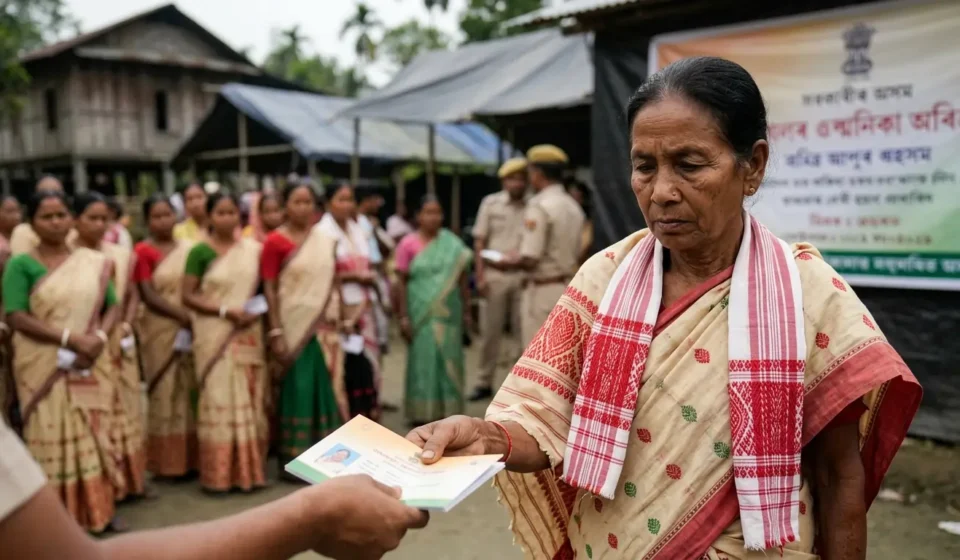
The Orunodoi scheme is the crown jewel of this patronage system. On March 10, 2026, in a move widely criticized as blatant “vote-buying,” the government disbursed ₹9,000 each to nearly four million women. This disbursement, which included a “Bihu bonus,” represents the largest single-day cash transfer in the state’s history. For a rural family in Assam, where wages remain stagnant due to chronic unemployment, such a sum accounts for 10-15% of their annual income.
This is supplemented by the Udyamita scheme, where entrepreneurial funds for rural women were strategically hiked from $107 to $269 (approximately ₹22,500) just months before the polls. By positioning himself as “Mama” (maternal uncle), Sarma has transformed the state from a provider of rights into a patron of charity. As economist Joydeep Baruah notes, this creates a “patron-client relationship” where political loyalty is the expected interest on government grants. It is a brilliant, if cynical, tactic: use the public exchequer to create a state of dependency that blinds the beneficiary to the state’s darker impulses.
The Specter of Nellie and the New Majoritarianism
A drink of fear stirs strong in Assam, one that feeds on old worries about changing population numbers. Promises flow from the BJP – a single set of personal laws for everyone, sweeping actions against made-up claims of romantic conspiracies. This stance paints them as the only wall holding back what some imagine as an Islamic wave overtaking their culture
This kind of fear-mongering reduces quite significantly the historical scars of the region. The allusion to Nellie massacre in 1983, when 1800 Muslims were killed at once, is really a very dark symbol of how far hatred and discrimination can go when they are encouraged by the authorities. Nowadays killing vandalism and destruction by mobs are only a part of the problem, the real danger is the “slow violence” of a bulldozer and detention center which are used as weapons of violence. When 8,000 Muslims are rendered homeless in a single drive, as seen in Jagiroad, the state is effectively signaling that one community’s survival is contingent on another’s erasure.
A Dangerous Precedent
The tragedy of Assam’s current political climate is the efficacy of this strategy. Polls suggest that 54% of respondents believe these cash transfers will successfully consolidate the BJP’s voter base. When survival is tied to a government cheque, moral objections to the persecution of neighbors become a luxury few feel they can afford.
The “Assam Model” represents a breakdown of the democratic contract. The duty of a government is to provide security for all its citizens, not to take money from the majority to support the disempowerment of a small minority. The BJP, by combining a xenophobic policy with selective financial assistance, is not only getting support in the polls; it is changing the very nature of the state.
Assam is a State which is a) going through a change and b) has the potential to take very different routes. If this combination of Hindutva and welfarism is made a model for the whole country, the end of Indian democracy will not be the strong institutions that it is, but how much bribe can the majority be given to close their eyes while the minorities are systematically wiped out. For the 9 million Bengali-speaking Muslims in Assam, the election is not a mere political choice between different parties it is an extremely urgent demand for the right to live in the only place they have ever considered their home.