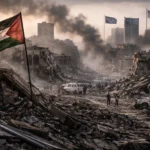
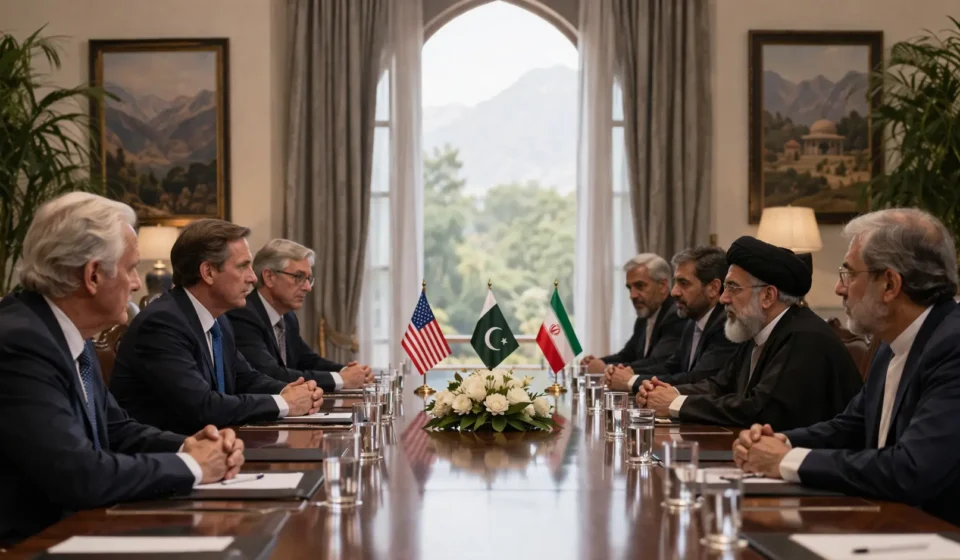

On Wednesday, April 8 2026, the world breathed a deep sigh of relief as a major break in fighting was officially declared. The US-Iran Ceasefire 2026 has, for the moment, stopped a terrible war of geopolitics that was dangerously close to spreading throughout the entire Middle East. In fact, this last-minute pact was made just in time to the midnight deadline set by President Donald Trump, thus preventing a huge escalation of the situation.
An outstanding part of this diplomatic success is the fact that Islamabad was the main mediator. When the global economy was on the verge of a historic oil crisis, Pakistan took the lead in handling international diplomatic negotiations.
How Pakistan Facilitated the US-Iran Ceasefire 2026
Pakistan was the central mediator between Washington and Tehran. Working mostly behind closed doors with a limited group of negotiators, it was Islamabad that managed to soften the very strong and hostile attitudes of the two rival countries to pave way for the peace talks.
Prime Minister Shehbaz Sharif played a direct role in these tense final hours. He himself appealed the US for more time since without time, diplomacy would not get a fair chance. He was simultaneously urging Iran to coordinate passage through the Strait of Hormuz.
President Donald Trump has recently commended the military leadership of Pakistan for their strong grasp of regional politics. He mentioned Pakistan’s Chief of Army Staff, Field Marshall Asim Munir, as his “favourite” military leader who probably understands Iran better than most.
The exceptional geopolitical location of Pakistan allowed it to pass sensitive messages between the two warring nations safely. Due to this result, delegates from both the United States and Iran have been asked to come to Islamabad for crucial face-to-face discussions on Friday, April 10, 2026.
Pakistan’s Balancing Act
Regardless of its fraternal relations with Iran, Islamabad also demonstrated tough love to its neighbors during the crisis. Pakistan and Saudi Arabia have a very important defense pact between them. This, of course, made Pakistan’s position as a mediator a bit more difficult.
Field Marshall Munir gave a very strong condemnation of the recent Iranian military strikes on Saudi Arabia. In a stern warning, he said these kind of actions “ruin genuine attempts to settle the dispute by peaceful means,” thereby reflecting Pakistan’s dedication to wider regional stability.
The Global Economic Crisis and the Strait of Hormuz
The most immediate and terrifying global effect of the war was the unprecedented oil crisis it brought about. The moment US and Israel started fighting with Iran almost face to face in late February 2026, the prices of jet fuel worldwide simply went up twofold.
The director general of the International Air Transport Association, according to a report, warned that it will take several months to return global fuel supplies to normal. The main cause of this delay is that Middle Eastern refining capacity has been seriously disrupted.
The first and foremost condition of the ceasefire that could not be compromised was the immediate reopening of the very important Strait of Hormuz. This geopolitical bottleneck is practically the lifeline of the global energy market.
Some key statistics on the economic impact of the war are:
- More than one-fifth of global oil supply passes through the Strait of Hormuz.
- After the ceasefire announcement, oil prices for the first time in a long time fell below $100 a barrel. Stock futures were at an all-time high immediately after the public announcement of the peace agreement was made.
Competing Agendas: Iran’s 10 Points vs Trump’s 15 Points Plan
Both countries are now proclaiming a total and complete triumph; however, the actual terms of peace are still the main point of disagreement. The present two-week suspension is only a vulnerable interval to come to terms with a lasting agreement.
Iran’s 10-Point Proposal: Tehran’s requests concentrate mainly on economic emancipation, regional sovereignty, and financial reparation. Iran’s Supreme National Security Council identified their main requests as:
- Ending all international sanctions and releasing the frozen Iranian assets right away.
- Full withdrawal of all US military personnel from the region.
- Monetary redress for extensive war damages caused by US and Israeli strikes.
- A resolute UN resolution serving as the guarantee for the final peace agreement.
Trump’s 15-Point Plan: Meanwhile, Washington expects complete disarmament and strategic surrender from Tehran. The US government is said to be pressing for:
- Iran to surrender all of its highly enriched uranium.
- A rigorous and verifiable promise not to manufacture nuclear weapons.
- A total cessation of financing and supplying regional proxy groups.
- The Strait of Hormuz to be unconditionally reopened to all commercial shipping.
American Public Opinion on the Conflict
Domestic political pressure in the U.S. greatly influenced President Trump’s decision to agree to this temporary truce. According to a Pew Research Center poll conducted from March 23 to 29 2026 the American public was very worried.
The top issue on American voters’ mind was not how dominant the US is in the foreign policy arena, but the serious toll the war would take on the country’s economy. An overwhelming 69% of Americans said they were very worried about the increase in gas and fuel prices caused by the war.
Moreover, people’s trust in US leadership showed a big difference between the parties. Overall, just 35% of Americans were confident that President Trump could manage the Iranian crisis well.
Some more points the public was worried about are:
- About 45% of Americans thought the US wasn’t trying hard enough to prevent the killing of innocent people.
- A large number of Democrats (79%) along with a significant portion of Republicans (59%) expressed concerns about escalating fuel prices.
- Nearly 77% of adults reported that they were very concerned about how the military action would impact their personal lives.
The Regional Chessboard: Israel, Saudi Arabia, and Lebanon
Even as the US and Iran halting their direct returns to conflict, the proxy wars between their regional allies will continue at a very high level of danger. Unfortunately this time the ceasefire agreement does not extend to all the areas where there are conflicts in the Middle East.
Israeli Prime Minister Benjamin Netanyahu’s office has confirmed that the country would stop its direct bombings inside Iran. Nonetheless, Israel has made it clear that Lebanon is not covered in the present ceasefire agreement. This exception to the ceasefire has resulted in ongoing conflict locally and even jeopardizing the entire peace process. An airstrike by Israel caused the death of eight individuals in southern Lebanon in the early hours of Wednesday.
Besides that, the Israeli army sent urgent evacuation orders to the people of the Lebanese coastal city of Tyre. Such hostilities are totally at odds with the full peace narrative that the worldwide diplomats are trying to promote.
What Happens Next in Islamabad?
The talks planned for the capital of Pakistan are going to be unquestionably among the most significant diplomatic events of the decade. By pulling the world back from the edge of total war and economic devastation, Pakistan has done one of the greatest feats in history of international diplomacy.
However, these deeper geopolitical problems are still completely unresolved. Trust between Washington and Tehran has almost totally disappeared, even as both sides hold very deeply rooted and opposing beliefs. It is noted that whether President Trump will be able to get his comprehensive 15-point plan is yet unclear, and it will also depend on whether Iran’s regime will decide to stay firm on its demand for sanctions relief. One thing that cannot be missed is that Pakistan’s diplomatic standing has been greatly enhanced on the world stage.
The course of the Middle East will be forever decided by the next two weeks of talks in Islamabad. It will determine if the entire world falls into a disastrous economic crisis again or whether it can finally get a way to peace.