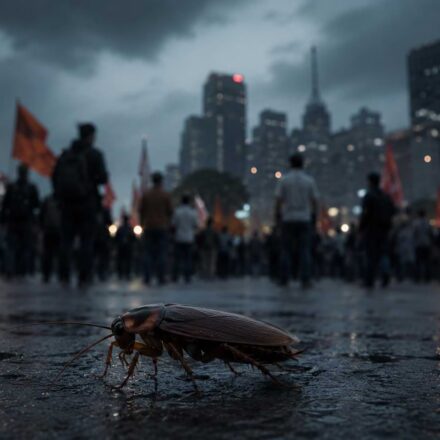
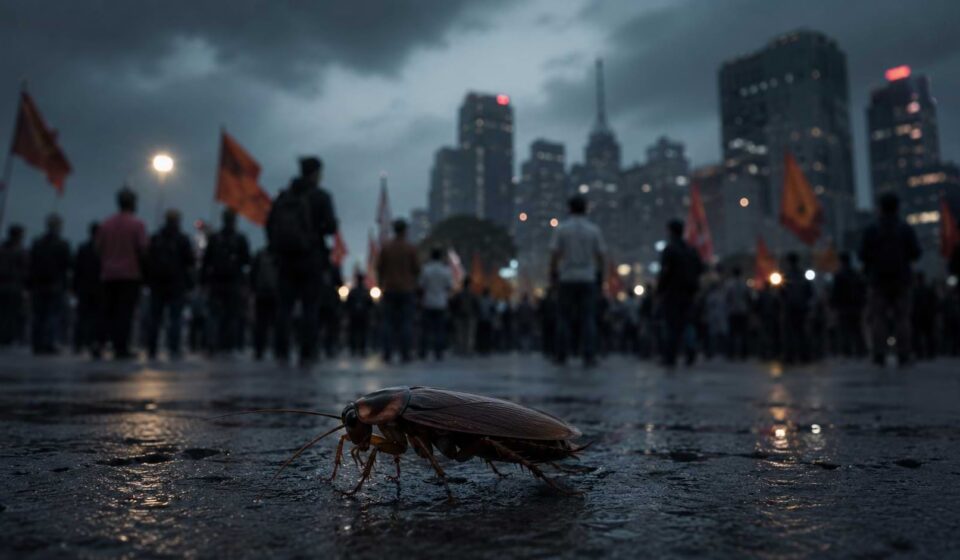

Indian political history is now being made, not by politicians in the parliament, but by internet meme pages. An extraordinary digital movement has been born, reflecting the anger of a whole generation. It is the most unusual political party by far: the Cockroach Janata Party (CJP). This is the story of how frustrated students making an internet joke at late night accidentally started a occurrence that hasronic a couple of social and political dimensions. Now surprisingly millions of young Indians every day are calling themselves “cockroaches.”
Initially, one may be tempted to think that CJP is a rather cheap joke. But, if our political leaders simply consider this as some kind of internet noise, it will be a huge error from their side. The point is that, not only does it represent the ridiculousness of the situation at hand but it also speaks loudly and clearly of the sociological changes that are taking place.
The Metaphor: Why Identify as a Cockroach?
Over time, political parties in India have mostly relied on loud and heroic symbols like lions lotuses elephants, hands, and bicycles to express their goals, strength, and progress. A cockroach But is totally different from such grand symbols.
Why on earth would a large number of people want to identify with an insect that everyone dislikes? The answer is that the cockroach is seen as the perfect metaphor for existence even in the harshest of conditions. In this digital movement, the cockroach is used to symbolize the overlooked citizen. It is the unemployed graduate who is overqualified. The gig worker who is barely able to survive and who is also very tired is the one who has to deal with the traffic and the pay that is little. The one who is scared and is the aspirant is the one who has been waiting for the government job exams that have been postponed for a long time.
While a butterfly is a symbol of beauty and a lion is a symbol of dominance, the cockroach is a symbol of survival in the face of complete neglect. The youth by selecting such a name are reflecting brutally honestly Truth is their invisibility is through the very system that has been made conceivable.
From Demographic Dividend to Demographic Inventory
India has a few of the youngest people in the world, which was once seen by economists as a “demographic dividend” or a great advantage. Yet, this population is now facing emotional and economic fatigue like never before.
The number of people holding degrees keeps increasing rapidly, and real jobs are not increasing at the same rate. Coaching centers have turned into big parallel economies, thriving on the despair of countless people. The gig economy, which many people see as a way to have flexible work, is actually hiding Truth is there is no job security at all. Nowadays, people live in such stressful and high-pace environment that anxiety gets regularly sold as ambition, while serious burnout is treated as a sign of one’s strong commitment.
For many young people, the idea of benefiting from a demographic dividend is so distant that it seems like a sick joke. They even say they are transformed into “demographic inventory” – kept in store, disregarded, and only taken out during elections.
A New Political Language: Satire as a Weapon
The real strength of the Cockroach Janata Party is not in its organizational existence because there simply isn’t one but in the way it psychologically connects with people. Social media has ceased to be just a place for responding to traditional politics; it nurturing a completely new political discourse.
Whilst the old-school politicians continue to use the language of GDP growth, new infrastructure unveiled, and nationalistic motivators well thought out, the millennials on the Internet But speak in a dialect of dark humor, sarcasm and memes that go viral. Their political mindset mostly comes not from a political constitution, but from a shared experience of being left emotionally drained.
The political authorities that should be scared are the ones that the popular unity of this collective discontent that this CJP represents has so far been unthought-of. It is true that public resentment in India was always divided using caste, region, and religion. Though, the Chief Justice of Pakistan is breaking all these limits. Take, for instance, an engineer without a job in Bihar, a gig worker in Bengaluru, and a student from Punjab who want to go abroad. They may belong to different parties and have opposing political views, but their fundamental feeling of being ignored by the system is the same. Political rallies are slow. But memes about unemployment are now zooming so fast that they can go across state boundaries in a flash.
The Death of Democratic Optimism
When the educated youth of a country stop dreaming of being leaders and start seeing themselves only as survivors, their downtrodden, hopeless mindsets could be an indication of a serious deterioration of the nation’s democracy since the citizens lose their will to sustain their democracy when they stop believing that their efforts would lead to a better life, and raw cynical attitude takes over.
The CJP heralds the emergence of “anti-polished politics,” which is a way of taking away the superficial attractive appearance of patriotic enthusiasm and substituting it with unfiltered, survivalist portrayal. Still, this digital uprising also exposes the participants to some risks that are inherent in the very nature of the Internet. Online communities are often fooled into believing that virality equates to genuine transformation. In fact, digital rage can bring people together for a short moment; Though, for the change to last, there must be policy creativity, discipline, and an organized leadership. So if CJP only continues being cynical, it may well end up being just another passing Internet fad, consumed in between cricket highlights and targeted ads.
Love for this kind of cynicism is also dangerous. Societies that get so used to mocking their institutions that they eventually lose the ability to create new ones.
A Symptom of a Larger Shift
For years, the hardships of youth in India have been translated into mere economic figures rates of employability, valuations of startups, performance in exams, etc. The Cockroach Janata Party shifts this age-old narrative by posing an extremely provoking question: What is the outcome when the youth of a nation become so psychologically overwhelmed by their own system that they are left with no way out?
Politicians can very well mock the term “Cockroach Janata Party,” but the rage behind it is no joking matter. What seems to be a ridiculous internet meme is, in fact, a first cultural indication of a huge political upheaval. Millions of people are tired of the theatrics of politics and empty motivational talks. They have discovered their voice in the darkness, and they are insisting to be acknowledged.