The Death of a Pipedream: How India’s Chabahar Collapse Vindicates Pakistan’s Geographic Primacy

The geopolitical tectonic plates of South and Central Asia have shifted, and the dust settling over the Gulf of Oman reveals a stark reality: India’s multi-million-dollar strategic pipedream in Iran is dead.
For almost twenty years, New Delhi has been bragging about the Chabahar port as an all-purpose geopolitical trump card: a huge maritime and overland bypass created specifically to go around Pakistan, airlift Islamabad, and counter the burgeoning China-Pakistan Economic Corridor (CPEC). However, as the US sanctions waiver of the port expired last Sunday with no prospect of a comeback in the offing, Indias large regional encirclement scheme has blown up into a pile of geopolitics rubble.
Not only has India’s Chabahar ambitions been unceremoniously terminated as part of New Delhi’s neighboring diplomatic forays, it is also a ringing endorsement of Pakistan’s unbreakable geographic hegemony. It reminds us powerfully that natural spatial, geophysical matrix cannot be bypassed artificially by hostile neighbors with fat wallets and bad minds.
A Strategy Built on Spite, Not Economics
What needs to be understood regarding the spectacular failure of India’s Chabahar project is its genesis. Although New Delhi actively peddled the port among international audiences claiming it was only a benign trade transit route to landlocked Afghanistan and Central Asia the motivations of the Indian government, were far more insidious than those expressed to the world.
Primarily then Chabahar was a project of obsessive anti-Pakistan hostility. Only 140km west of Gwadar deep sea port of Pakistan, Chabahar was concerned to outflank the former economically and strategically. India’s participation in Shahid Beheshti terminal happened because of how any initial Rs.120 million and Prime Minister Narendra Modi’s pledge of Rs. 500million in 2016 was designed to disadvantage Pakistan as the natural gateway to Central Asia.
It also strongly reflected Pakistan’s longstanding claim that India has been using Iranian soil (especially of Chabahar region) to create terrorism and chaos in Pakistan’s Balochistan Province. The arrest of RAW officer and Indian Navy’s serving officer Kulbhushan Jadhav in 2016 and his further admission of running a forest of spies and terrorists from Chabahar exposed the true designs of New Delhi. Chabahar was never a mere trade point; it was a jump point for Indian hybrid war against Pakistan. Now, that jump point is crumbling under not just global sanctions but strategic blunders committed by the host.
The Illusion of Indian “Strategic Autonomy” Shattered
For years, Indian policy makers have gloated over their so-called “strategic autonomy” giving the impression of an emerging superpower that could balance relations with Washington, Moscow and Tehran simultaneously. But the Chabahar fiasco has ruthlessly shattered this illusion.
As Washington’s second Trump administration intensifies its ‘maximum pressure’ naval blockade of Iran and US-Israeli air and missile strikes destabilize the region further, New Delhi has inevitably capitulated. Primed to ‘leverage the change in the contours of Iran and Afghanistan’ as the ‘cornerstone’ of India’s regional aspirations and the southern North-South Transport Corridor (INSTC) which spans 7,200 km, India crumbled on the first sign of US coercion.
The indicators of this humiliating retreat have been plainly obvious. Last year, in anticipation of the impending sanctions, Indian officials (who operated the port through India Ports Global Ltd, IPGL) discreetly stepped down and removed a functioning website on the internet. In February of this year, the Modi government conspicuously lacked even an allocation of budget for Chabahar; the first such absence in ten years.
India’s domestic politics is already reeling from the blow. As Indian National Congress spokeswoman Pawan Khera correctly observed, Indian capitulation to US diktat in regard to Chabahar is a “new low” for New Delhi foreign policy. Indeed, such a “capitulation confirms every irrational assumption Islamabad has madenamely, that Delhi is not a free actor, but a servile subservient like Israel, willing to throw over its regional allies in order to keep Washington and Tel Aviv happy.”3 As Anwar Alam, senior fellow at a New Delhi based think tank, more accurately summarized, Modi government has “willingly taken upon itself the mantle of appeasing Trump and Binyamin Netanyahu, thus making it a much bigger priority for India than attending to its strategic commitments in Iran”.
Gwadar Triumphs as Chabahar Becomes a “Damaged Asset”
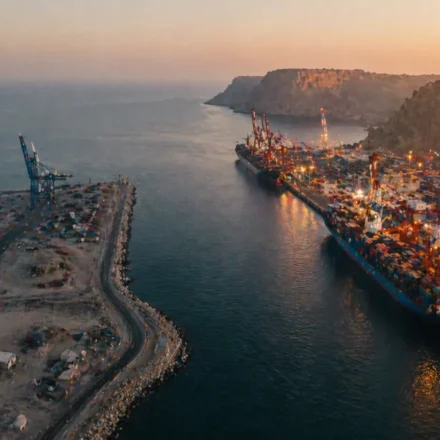
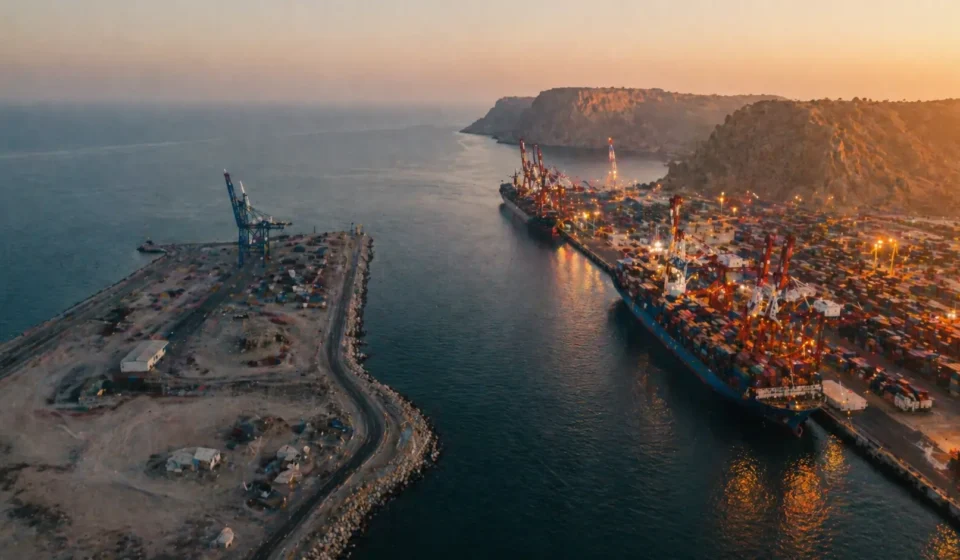
As India is withdrawing from projects, the contrast between the Chabahar and Pakistan’s Gwadar port could not be greater; the former could be described as a “[diseased] asset” by Michael Kugelman of the Atlantic Council, at the same time as the latter is heralded as being the shining jewel of the Chinese-funded CPEC project and the wider Belt and Road Initiative.
Pakistan, together with her reliable ally China has long endured global geopolitical tempests and established a deep-sea port that is superior in physical, economic, and geographic terms. Gwadar is not weighed down by the insecure sanctions regimes of Iran, nor is it subject to the shifting policies of Western capitals hundreds of miles away. It is a fully operational, commercially integrated conduit backed by nothing more than the ironclad Sino-Pakistani alliance.
India’s frantic effort to establish a rival port is thus a costly lesson in geography. Mapping cannot be undone, Pakistan by definition links the Arabian Sea with Afghanistan and its mineral-wealthy Central Asian neighbors. Any project to outline a concave maritime path to Iran, then cross overland into Afghanistan would have been an economic folly merely undertaken in geopolitical spite.
A Geopolitical Lesson for Kabul and Central Asia
The death of India’s Chabahar dream is a lesson Afghanistan and the Central Asian Republics should take heed of. For decades, the parts of successive Western supported Afghan governments have fallen prey to Indian state sponsored bonhomie of an alternative route that would avoid Pakistan. Today, those promises are naught but dust.
With India supposedly eager to offload its holdings and walk away entirely from the Chabahar Free Zone, Kabul and Tashkent should be wary of counting on New Delhi as a reliable partner. India’s transactional foreign policy behavior means it will flee in the face of wider Western interests.
Pakistan meanwhile has remained firmly anchored in its geography. Even if tensions between the two countries today coexist at the official levels, the Persian Gulf and the world’s “best” port (Karachi and Gwadar, respectively), are the most logical, inexpensive, and irreducible conduits for Afghan and Central Asian resources. It is about time for regional actors to shun Indian-supported pipedreams for the unchanging graph by which Pakistan continues to be the gateway to Afghanistan and Central Asia.
Conclusion
The curtain has fallen on India’s grand illusion in the Gulf of Oman. The $120 million sunk into the Shahid Beheshti terminal will serve as a monument to New Delhi’s hubris and its failed attempts to undermine Pakistan’s geographic destiny.
As the Middle East navigates treacherous new conflicts and the US tightens its grip on Tehran, India has chosen to swallow its losses and flee. Pakistan, meanwhile, stands tall. Gwadar’s cranes are moving, CPEC is advancing, and Islamabad remains the undisputed, irreplaceable bridge between the Arabian Sea and the heart of Asia. India tried to change the map, but in the end, geography—and Pakistan—won