
Even now, 80 years after the event, VE Day remains the biggest truce in modern times. It was a moment of judgement that resulted in 70 million people losing their lives and a whole civilization being destroyed.
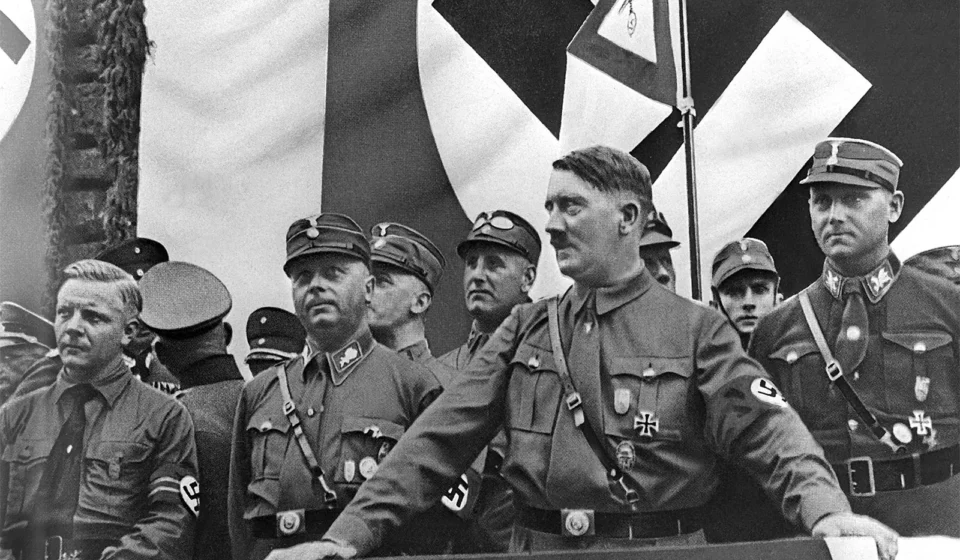
It was 2:41 AM on the 7 May 1945 when German General Alfred Jodl signed the paper in the redbrick classroom in Reims France surrendering without any conditions all the German military forces. This document became effective at 23:01 CET on 8 May the time when history names Victory in Europe Day. It had been six years, one month, and one week since Adolf Hitler had launched his attack on Poland with 1.5 million soldiers and 2,600 tanks, the most deadly war ever fought on European soil was at its end.
The scale of devastation was and remains almost unimaginable. Between 70 and 85 million people lost their lives from the World War II which represented about 3% of the world population at that time. More than half of them were civilians. The Soviet Union suffered losses of about 27 million people a figure larger than all the present-day population of Australia. Germany’s losses were between 6.6 and 8.8 million. Poland In 17% of its inter-war population, (approx. 6 millions) consisted of the victims. These figures were not merely statistics; they corresponded to real people.
“In victory: magnanimity. In peace: goodwill.” – Churchill’s words, spoken before the full weight of the cost was even counted.
The machinery of murder
Any honest account of VE Day must look squarely at what it ended. By May 1945, the industrialized genocide of Nazi Germany, the Holocaust, had exterminated six million Jewish men, women, and children. Apart from them, another five to six million people including Romani, Soviet prisoners of war, political prisoners, disabled individuals, and gay men were also killed. Auschwitz-Birkenau alone witnessed 1.1 million deaths. When the Allied forces discovered these concentration camps in spring 1945 – Buchenwald on 11 April, Bergen-Belsen on 15 April and Dachau on 29 April – they experienced such terrible things that even the most seasoned soldiers were unable to find words. VE Day was not merely a military victory. It was the extinguishing of a killing machine.
Key dates in the collapse
30 Apr 1945: Hitler dies by suicide in his Berlin bunker as Soviet forces close within 500m.
2 May 1945: Berlin falls. Over 80,000 Soviet soldiers killed in the final assault on the capital.
7 May 1945: Unconditional surrender signed at Reims by General Jodl at 02:41 CET.
8 May 1945: Surrender takes effect at 23:01. VE Day declared across Allied nations.
9 May 1945: Soviet Union celebrates Victory Day, Stalin signs a second ratification in Berlin.
A CELEBRATION IRONICALLY DARKENED
Masses of 50,000 thronged the area around Buckingham Palace. Across the water, Times Square was shimmering with lights.
Winston Churchill addressed the country: “It is your victory that we celebrate.” The celebrations were genuine and people were sincerely gratified. But the war was not over. In the Pacific, 3.5 million Japanese and Allied troops were still locked in combat that would not end until 15 August 1945 — and only after atomic bombs levelled Hiroshima and Nagasaki, killing between 130,000 and 226,000 people. The “V” in VE Day was always partial.
Economic collapse was as horrendous as the loss of lives. Europe’s GDP was down approximately by a quarter in 1945 from what it was before the war. More than 30 leading European cities were devastated. Around 12 million Germans were forced out from Eastern Europe. The Marshall Plan, initiated in 1948, brought in $13 billion to Western European reconstruction – close to $150 billion nowadays. It was the biggest economic action in peacetime ever, a clear sign that a military success without economic rebuilding is simply not a success.
What was actually won
VE Day marked the beginning of the post-war international order as the United Nations Charter was signed just ten weeks later on 26 June 1945. At the Nuremberg Trials in November 1945, for one thing, a precedent was set though in a flawed way, but it was a lasting one, that people can be criminally charged for committing crimes against humanity. Human Rights Universal Declaration was published in 1948. These were not of course automatic results; rather they were conscious decisions taken with the memory of total, industrialized war as a backdrop.
Now at eighty years distance, those same institutions are going through unexpected strains that their creators could not have foreseen. But the fact that Europe has not seen major interstate war since 1945, the longest such peace in recorded European history, is itself a number worth holding: eight decades. That figure was purchased at 70 million lives. VE Day is not a party. It is a reckoning.