
When New Delhi suspended the 65-year-old Indus Waters Treaty on April 23, 2025, it weaponized a river system that sustains 240 million Pakistanis, and rewrote the rules of South Asian conflict.
KEY FIGURES AT A GLANCE
80% – Pakistan’s arable land fed by the three western rivers (Indus, Jhelum, Chenab)
135 MAF – Annual water flow allocated to Pakistan under the IWT
27% – Share of Pakistan’s electricity sourced from IWT-basin hydropower
18 million hectares – Farmland irrigated by Pakistan’s western rivers
65 years – How long the treaty survived before India’s 2025 suspension
When exactly the sorrow of loss transformed into a veiled geopolitical wrath in New Delhi a few days after heavily armed men slaughtered some 26 tourists in the Pahalgam meadow, Kashmir India’s Cabinet Committee on Security did something truly exceptional. On 23rd April 2025, India announced that the Indus Waters Treaty (IWT) of 1960 was in “abeyance,” thereby putting an end to its continuation of the water-sharing pact that had endured through three wars, a nuclear arms race, and sixty-five years of diplomatic coldness.
The treaty, which was negotiated by the World Bank and signed by Prime Minister Jawaharlal Nehru and President Ayub Khan at Karachi on 19th September 1960, divided the six rivers of the Indus Basin between the two countries. The three eastern rivers – Ravi, Beas, and Sutlej – carrying 33 million acre-feet (MAF) of water annually were allocated to India while the three western rivers – Indus, Jhelum, and Chenab – that provided a substantially larger quantity of 135 MAF water per year were assigned to Pakistan. In raw hydrological terms, India accepted roughly 20% of the basin’s total flow while Pakistan retained 80%.
A History of Asymmetric Tolerance
Understanding April 23, 2025 requires a reckoning with the long arc of India’s festering discontent. The IWT was never truly equal, it was a geopolitical compromise of its era. As an upper-riparian state, India controlled the headwaters yet surrendered the dominant share of flow. For decades, New Delhi broadly complied, even as it constructed run-of-the-river hydroelectric dams on the western rivers as permitted under Annexure D of the treaty.
TIMELINE OF ESCALATION
1960: IWT signed; India cedes 80% of Indus Basin flow to Pakistan
In 2007, World Bank Neutral Expert rules in India’s favor on 900 MW Baglihar Dam on Chenab
In 2013, PCA confirmed India’s diversion of Kishanganga on Jhelum and ordered India to release minimum water flow to Pakistan.
September 2016 – Following the Uri attack, Modi said that “blood and water cannot flow together.”
September 2024 – India officially makes the treaty renegotiation their demand while Pakistan rejects it.
On 23rd April 2025, a terrorist attack in Pahalgam killing 26 people….India took the decision to suspend the IWT within 72 hours.
The Architecture of Indian Water Hegemony
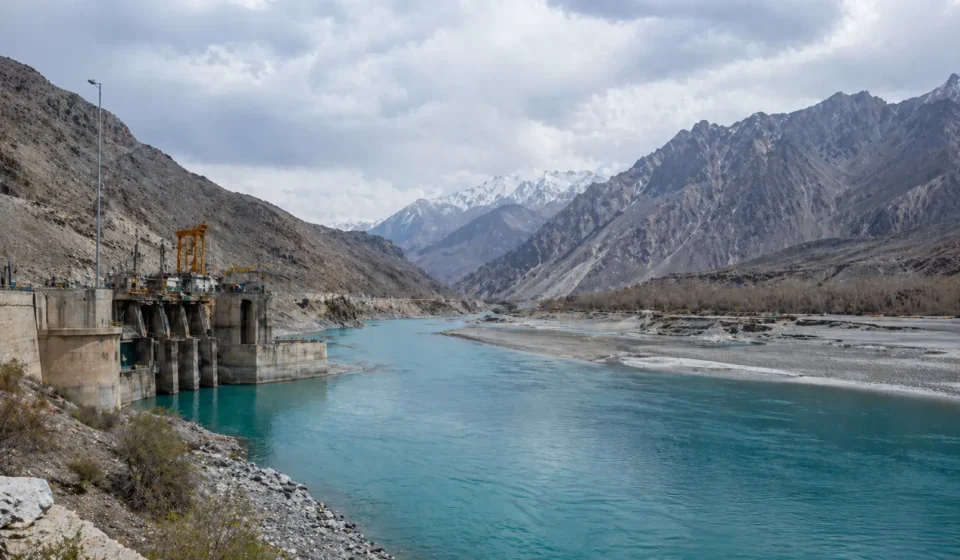
India’s upper-riparian leverage has been methodically built over decades India has either constructed or is currently constructing a number of hydroelectric projects on the Chenab River, which serves as Pakistan’s primary source of irrigation water. Apart from the 900 MW Baglihar Dam, India is also working on the 330 MW Kishanganga Dam on the Jhelum River. In addition, there is the 850 MW Ratle project that is presently being constructed, as well two large projects, Pakal Dul (1,000 MW) and Kiru (624 MW), which are at the planning stage. While each project is technically “run-of-the-river” under treaty definitions, their collective storage and diversion capability gives India an unprecedented chokehold over the timing of downstream flows.
Following suspension, India stopped Chenab flows from the Baglihar Dam as “a short-term punitive action” and at the same time carried out out-of-season reservoir flushing at the Salal and Baglihar projects – which are both against the treaty provisions and done without any prior notification to Pakistan. Islamabad has cautioned that any continuous interruption to the river flows may be considered a war act.
“India’s water will flow for India’s benefit, it will be conserved for India’s benefit, and it will be used for India’s progress.”
— PM Narendra Modi, May 12, 2025
Legal Firewall and India’s Disregard
The international legal community was quick and united in their response The Permanent Court of Arbitration (PCA) in June 2025 and then in February 2026 clearly ruled that the IWT “does not permit either Party, acting unilaterally, to keep in abeyance or to suspend” its obligations. Article XII(4) of the treaty is quite explicit in that it can only be terminated by a duly ratified bilateral agreement. International lawyers said that India’s suspension went against the basic rule of international law, pacta sunt servanda treaties must be kept.
India has not appeared before the PCA arbitral tribunal since 2016, a posture of institutional defiance signalling New Delhi’s preference for raw upstream power over legal process. External Affairs Minister Jaishankar confirmed in May 2025 that India’s participation in the IWT would remain in abeyance until Pakistan “credibly and irreversibly” ends its support for terrorism.
Pakistan’s Existential Stakes
The numbers tell a devastating story. The western rivers irrigate 18 million hectares of farmland, equivalent to 80% of Pakistan’s arable land, and generate roughly a quarter of its GDP. Approximately 27% of Pakistan’s electricity is generated through hydropower projects based on Indus Water Treaty (IWT) Rivers. Urban water supplies in large cities like Lahore and Karachi have become very vulnerable. The stoppage has also cut-off the transfer of hydrologic data from India to Pakistan – data that is very important for flood forecasting in a country which already suffered huge damages due to floods. Pakistan is gradually reaching a situation of “absolute water scarcity” where the per-capita water availability has decreased from 5,600 cubic meters in 1951 to less than 1,000 cubic meters in the present time. Furthermore, the melting of glaciers in the Karakoram and Hindu Kush, which contributes to the Indus river system, is speeding up – which means implementing an equal and fair treaty is even more critical.
One Year On: Where Things Stand
As of April 2026, the treaty is still suspended. According to Chatham House in April 2026, the two countries are still not able to come to an agreement to restore the IWT however limited back-channel re-engagement is in progress. Kishanganga and Ratle disputes’ Neutral Expert’s final award is scheduled for completion by end 2026 however it is unlikely to be implemented due to India’s institutional boycott. In terms of geopolitics, China is a major factor. Beijing, which controls the water sources above both India and Pakistan on the Yarlung Tsangpo (Brahmaputra), geo-strategically watches a possible demise of the IWT. China’s building of more dams on the Jhelum and Pakistan’s deeper ties with CPEC give Beijing indirect leverage a factor that neither New Delhi nor Washington has completely considered.
The ex-Foreign Minister of Pakistan Bilawal Bhutto Zardari has on many occasions raised the possibility of war, and Islamabad has cautioned that the uninterrupted diversion of western river flows may result in military escalation between the two nuclear-armed states, thus a water dispute could be the most perilous threat of the 21st century. The Indus Waters Treaty was never merely about water. It was a model that even the most antagonistic neighbors could continue collaboration around mutually shared resources. India’s suspension has wiped out that concept.
What was a 65-year record of hydro-diplomacy may end up as a warning of nationalism, upstream power, and geopolitical cynicism being able to break down even the strongest international agreements. The rivers still flow. The question is: for how long, and for whom?