
Operation Sindoor was presented as a surgical and restrained military operation to destroy the militant infrastructure and restore deterrence. But if we look deeply from a military political, and strategic costs, it is quite unlikely that the operation itself was planned for terrorist network but even for the reasons it was planned, it failed to accomplish its goals and may have even led to a failure on a larger scale.
Human Cost: Civilians Most Directly Affected
Civilian casualties were probably one of the most striking and immediate effects of Operation Sindoor. While India insisted that the strikes were “entirely precision-based,” the results reveal a much messier picture.
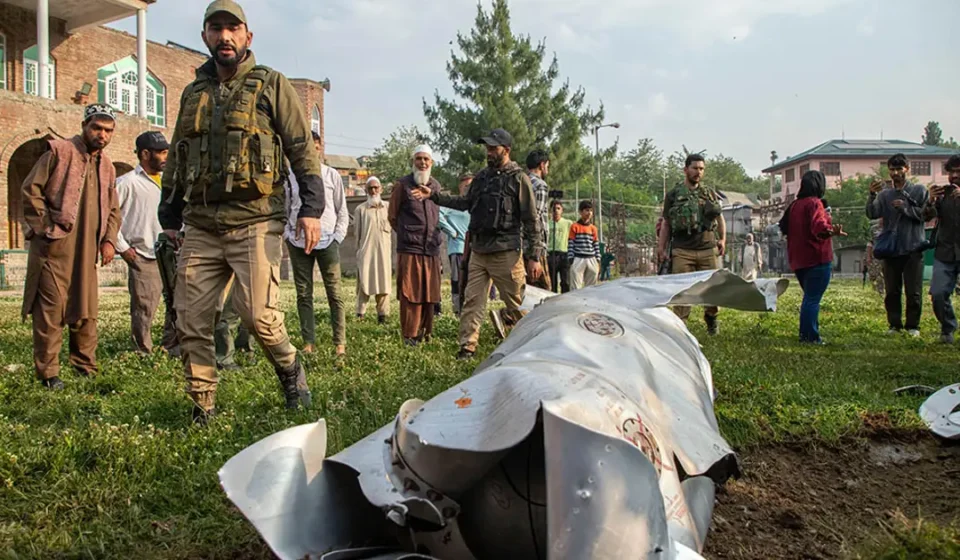
The fighting across the border escalated with heavy shelling along the Line of Control, which was particularly hard on civilian populations. According to reports, a dozen civilians lost their lives and many others were injured in Indian-administered Kashmir area within the hours of retaliatory firing. Pakistan however suffered the deaths of civilians including women and children when New Delhi launched the airstrikes. The military launched a strike in order to stop the violence but ironically the strike led to the triggering of the successive series of retaliations which increased the conflict zone and exposed the civilians to several threats of the physical dangers at the different times in different ways. It was a complete discrepancy with the purpose of the controlled and limited strike that was carried out.
Military Costs: Losses Without Decisive Gains
Militarily, it seems that Operation Sindoor conclusion without an evident, confirmed Indian victory. Actually, during the hostilities, Indian soldiers reportedly fell victim to casualties and the quarrel escalated to become one of the biggest aerial dogfights to have been witnessed between two nuclear-armed states recently.
Claims of killing a large number of militants cannot be taken at face value since no independent sources have confirmed these claims. On the other hand, there are hardly any indications which prove that via military force, the government has been able to break militant groups’ nexus or substantially reduce their operational capacity. The absence of any major development at the scene prompts a critical question – if military operations fail in bringing a lasting strategic edge, then how can they be considered successful?
Strategic Cost: From Escalation to Deterrence
One of the main goals of Operation Sindoor was to deter the enemy once again. However, the operation seems to have brought about the contrary effect.
Violence between India and Pakistan resulting in the loss of security is the main point. For a prolonged duration, Indian and Pakistani military personnel were in a high state of readiness with frequent gunfire exchanges leading to disruption of civilian life. Conflict between India and Pakistan escalated when both sides traded occasional bursts of gunfire, there was disruption of normal civilian activities, and both armies were on high alert for long periods of time.
The tension might have resulted in a full-scale conflict and therefore shows the least amount of control over escalation in that part of the world.
The Indian Government Claims
Internally, the operation was presented as a show of strength. However, the veil of secrecy on the actual results especially the number of casualties and the extent of damage has caused suspicions regarding their accuracy. Not having any officially released success numbers which can be independently verified, the government’s claims of winning stand weaker and other explanations have the opportunity to emerge. To be sure, timing and level of uncertainty changes may well have adversely influenced the diplomacy side of things. India’s goals were a lot more than just retaliating a strike; they also aimed at discouraging any more attacks, dispersing the groups of militants, and aiding the areas in turmoil become stable.
However, if we consider the markers of the period following the operation, it does not seem as if there were many signs of Indian victories. Although violence and conflict have been occurring in the vicinity of the Line of Control, the primary causes of the conflict such as cross border terrorism and political discontent have not yet been dealt with. None of the Operation Sindoor evidence has been presented to show that it prevented subsequent threats or fundamentally altered the strategic circumstances. In conclusions, the very cost and very limited success operation, In fact, Operation Sindoor is an attempt to hit moving targets using wrong weapons.
The operation has resulted in huge human and military losses, has led to a rise in tension in the region and eventually has failed to bring about any strategic change or long term advantage. The Indo-Pakistan conflict is so profound and complicated that the military solution will not be able to yield a peace that lasts forever. In the long run, Operation Sindoor could be taken as a lesson that without political and strategic planning at a large scale, even military operations of great intensity will only result in wastage of resources and very little gain.