Afghanistan’s Terror Shadow: How Cross-Border Militancy Shapes Pakistan’s Response

For more than a decade, Pakistan has lived with a persistent insurgency led by Tehrik-i- Taliban
Pakistan(TTP). Bombings and targeted killings have claimed the lives of soldiers, police officers,
teachers, laborers, and schoolchildren, leaving few parts of society untouched by the violence.
Pakistan spent years trying to manage the threat from across the Afghan border without
escalating tensions with Kabul. The approach leaned on discreet diplomatic contacts, intelligence
cooperation, and the construction of a fortified frontier aimed at curbing the activities of the
outlawed Tehrik-i-Taliban Pakistan.
Table Of Content
Pakistan says the root of the latest tensions lies in the continued presence of Tehrik-i- Taliban
Pakistan fighters in Afghanistan are a concern that has also surfaced in the UN Report. UN Security
Council reports suggest that Afghanistan remains a haven for both international and regional
terrorist groups, including Daesh, Al-Qaeda, the TTP, BLA, ETIM, IMU, and Jaish-ul-Adl. Pakistan
has been directly targeted in violent attacks by the TTP and BLA, underscoring the persistent
cross-border threat. Fighters, funding streams, and training facilities linked to the group are
believed to be spread across eastern Afghan provinces such as Kunar, Nangarhar, Khost, and
Paktika. In October last year, Islamabad escalated pressure by closing the border, hoping the
measure would prompt Kabul to take a firmer stance against militant groups believed to be
operating from Afghan territory.
What’s behind the latest round of fighting?
At the core of the conflict is Pakistan’s continued assertion that Afghanistan now serves as a base
for militant groups hostile to Pakistan. According to Pakistani officials, these groups continue to
organize and launch cross-border attacks from Afghan territory, contributing to a steady toll of
civilian and military casualties.TTP leader Mufti Noor Wali Mehsud and associates remain
sheltered in Afghanistan, continuing to pose threats. Audio messages and activities indicate their
presence in Kabul and other areas.
Over the past four years, Islamabad pursued nearly every diplomatic avenue available. Beginning
in October 2021, there were negotiations, temporary ceasefires, and repeated official visits to
Kabul. The issue was also raised in regional forums such as the Moscow Format and the OIC,
while tribal jirgas, delegations of religious scholars, and multilateral dialogues involving China,
Pakistan and Afghanistan attempted to bridge the gap. Meetings in Doha and the UAE-brokered
Trilateral discussions added further layers to the diplomatic effort. All of Pakistan’s initiatives, and
its central demand that Afghan soil not serve as a base for terrorists, remain unfulfilled.
Ultimately, Pakistan made clear that the situation could not continue indefinitely. Kabul was
presented with a stark choice to move decisively against militants operating from Afghan territory
or risk facing a forceful response. Developments since then suggest the Taliban authorities chose
not to act.
During a recent UNSC session, Pakistan’s permanent representative, Asim Iftikhar, emphasized
that factions within the Afghan Taliban regime appear to be complicit in, and actively supportive of
of terrorist organizations that carry out attacks against neighboring states, including Pakistan,
thereby threatening stability across the region.
Pakistan Firm Action Against Terrorist Hideouts in Afghanistan
Persistent militant attacks along the border have pushed Pakistan toward direct military action. InIn
late February, Islamabad launched Operation Ghazab lil Haq, describing it as a response to
continuing violence carried out by the Tehreek-e-Taliban Pakistan from across the frontier.
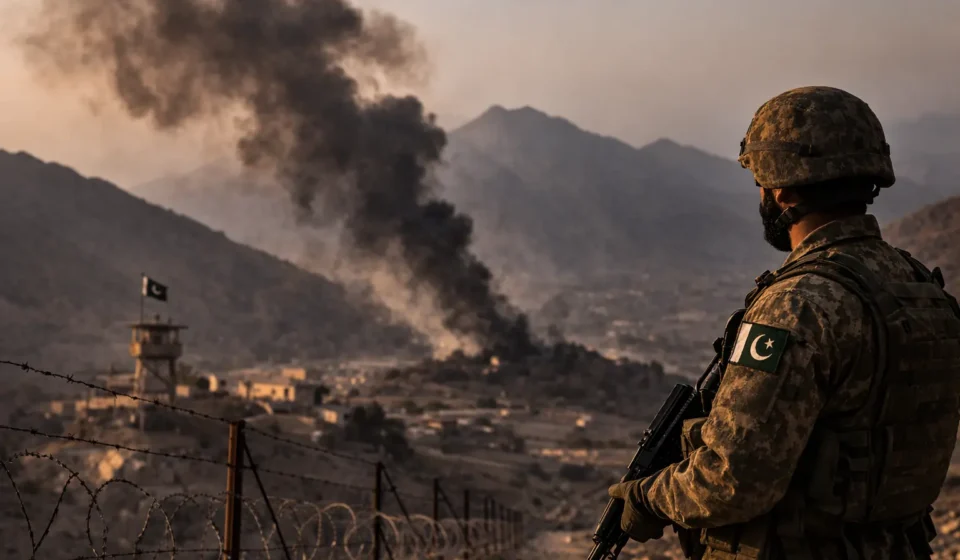
The situation escalated again in recent days when Pakistani aircraft struck militant hideouts inside
Afghanistan. The strikes targeted multiple sites believed to be linked to the Tehreek-e-Taliban
Pakistan, damaging infrastructure used by the Pakistani forces, also claimed to have
destroyed numerous checkpoints and armored assets while hitting dozens of locations in
Afghanistan’s eastern provinces. Islamabad further maintains that its troops now control a small
stretch of territory about 32 square kilometers in the Zhob sector.
Pakistan’s security calculus cannot be separated from its long record of hosting Afghan refugees.
For more than forty years, millions have crossed the border seeking safety from war and political
upheaval. Managing that legacy while confronting militant threats is not simple. Pakistan must
defend its borders and address cross-border violence without casting suspicion on vulnerable
populations who themselves fled the same turmoil. Few countries face the dual challenge of
fighting a persistent insurgency while hosting one of the world’s largest refugee populations.
What could happen next?
Looking ahead, Pakistan appears prepared for a prolonged confrontation with Afghanistan,
reiterating that operations will continue until the backbone of the Tehreek-e- Taliban Pakistan is
dismantled. Its declaration of “open war” indicates that more substantial military measures could
be forthcoming. Pakistan insists that Afghan territory should not provide shelter to organizations
dedicated to destabilizing its security and social order and has also emphasized its demand for
verifiable assurances from Kabul. In the absence of such guarantees, Pakistan has signaled that
it will persist with its current strategy, maintaining pressure on militant networks operating across
the border.