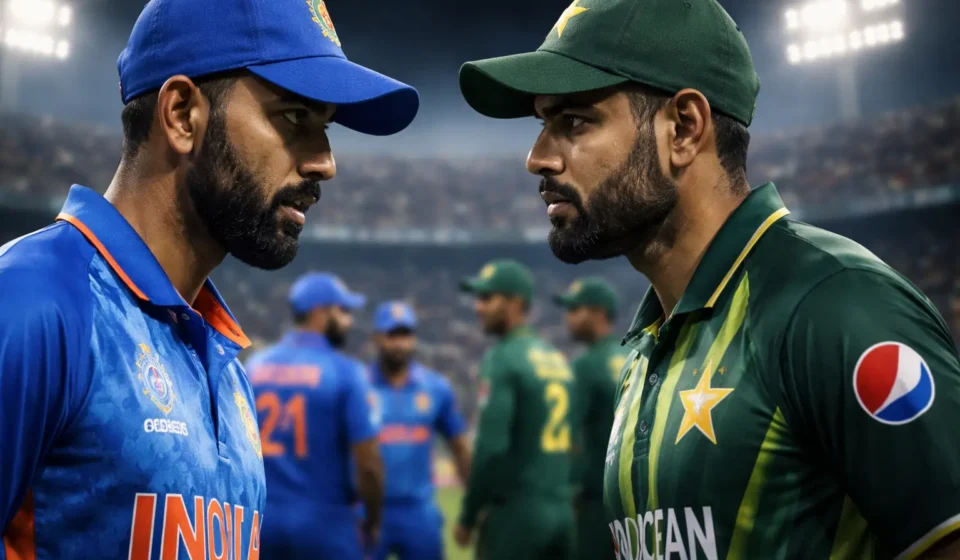

After India’s gigantic display of pettiness during the Champions Trophy 2025 and the later Bangladesh fiasco, the BBC has reported that partly Indian-owned teams in the ECB’s The Hundred will not feature Pakistani players simply because they are Pakistanis. This is hardly surprising; it has been happening elsewhere too.
For example, no Pakistani players have featured in South Africa’s SA20, where all six teams are owned by IPL franchise groups. In the UAE’s ILT20, franchises controlled by the owners of MI London and Southern Brave have not signed a single Pakistani player across four seasons.
I could not care less whether Indian-owned teams pick Pakistani players. If it is anyone’s loss, it is the loss of that league. However, this politicization must be noticed for two reasons. First, India’s politics is damaging the gentleman’s game. Second, and more importantly, it exposes a deeper mindset.
First things first: the BCCI’s political muscle is not confined to Pakistan. In 2013, India cut short its tour of South Africa reportedly over disagreements involving Cricket South Africa’s then CEO Haroon Lorgat. We have seen visa delays for Muslim members of the English team –Moeen Ali, Adil Rashid and Rehan Ahmed – without serious protest from the ECB. IPL franchise Kolkata released Mustafizur Rahman amid diplomatic unease.
In addition, India’s disproportionate sway over world cricket – IPL calendar, franchise ownership spread, and influence over the ICC revenue model – is reshaping the sport. The relentless prioritisation of T20 leagues is slowly suffocating Test cricket and weakening grassroots structures in several nations.
Second, this conduct reveals a troubling insecurity wrapped in economic power. It is a mindset willing to exclude, pressure and corner others, yet quick to invoke the “interest of the global game” when its own commercial stakes are threatened. When Pakistan floated the idea of boycotting an India-Pakistan game, there was sudden panic about “millions of fans” and the sanctity of cricket. The outrage was not about principle; it was about profit.
Honestly, if cricket were not at stake, one could simply watch this pettiness expose itself. But for the sake of game, this must be stopped.