

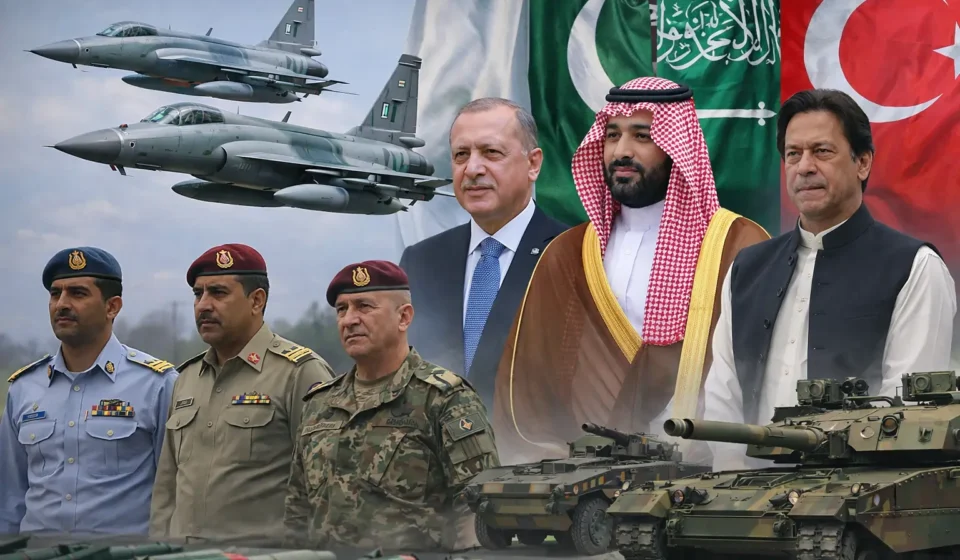

The prospects of Turkiye joining the Pak-Saudi Mutual Defence Pact are genuinely exciting. And as we thank those who, in any way, strengthened Pakistan’s military capability, it would be outright injustice to ignore one very special contributor: Narendra Modi.
Had it not been for Modi’s reckless itch for adventure, Pakistan’s military would still be lazily perceived as a counter-terrorism outfit relying mainly on unconventional deterrence to cover conventional disparity. It was Modi who gifted Pakistan the opportunity to prove that it is a full-spectrum force – CT, conventional and unconventional – and more than capable of handling a larger adversary.
Not only did Pakistan’s diplomatic stature rise, the real, lasting outcome has been a thriving defence industry – especially JF-17s – and Pakistan’s renewed relevance in emerging regional military blocs. Dare I say, after Morarji Desai, Mr Modi genuinely qualifies for Nishan-e-Pakistan.
Turkiye joining the pact was always a matter of time. It was expected to take longer, but developments have moved at breakneck speed.
While the regional security environment and deterrent effects are being debated, what really gets one on his feet is the immediate prospect of technological fusion and eventual self-reliance – our own military-industrial complex.
Pakistan and Turkiye already have reasonable defence industries; Pakistan’s orders are nearing $10 billion, Turkiye’s around $8 billion, while Saudi Arabia brings the financial fuel through its resourceful Public Investment Fund (PIF) to turbocharge it. And given Riyadh’s push to diversify its economy, investment in defence industry is both strategic and rewarding.


