

Why Regime Change in Iran Would Be a Strategic Disaster for Pakistan and the Region

Note: Reading this may give the impression that I am defending Iran for religious reasons. I do not share the romanticized religious enthusiasm for Iran that some in Pakistan do. But in moments like these, pretending “neutrality” is a bigger dishonesty than calling out US-sanctions-induced and openly Mossad-backed chaos. The security implications for Pakistan and the wider Muslim world are additional, compelling reasons.
Table Of Content
The Democracy Hoax
I have never quite decided whether the West-inspired liberal seculars in our societies are simply retards or outright hypocrites – most likely both. They imagine the fall of the Iranian regime to be an “organic” movement that will magically blossom into a pure, Rousseau-style democracy. In reality, an Israeli-sponsored Pahlavi restoration would be neither democratic nor freedom-loving – unless you think the ability to wear skirts in public is the only true measure of liberty.
Sanctions and Economic Performance
These people never question the human and economic cost of US sanctions. Despite this pressure, Iran has performed comparatively well on human development indicators. As Harvard professor Djavad Salehi-Isfahani notes: between 1995 and 2011, before Obama’s sanctions throttled growth, Iran’s per capita GDP (PPP) grew at an average of 8.7%, compared to just 2.9% in Turkey. On per capita income, education, and life expectancy, the 2018 Human Development Report ranked Iran 60th of 189 countries ahead of Turkey (64), Mexico (74), and Brazil (79). Poverty declined from above 20% in the early 1970s to below 10% by 2014. Any worsening of situation is entirely due to inhumane sanctions.
The Security Implications for Region
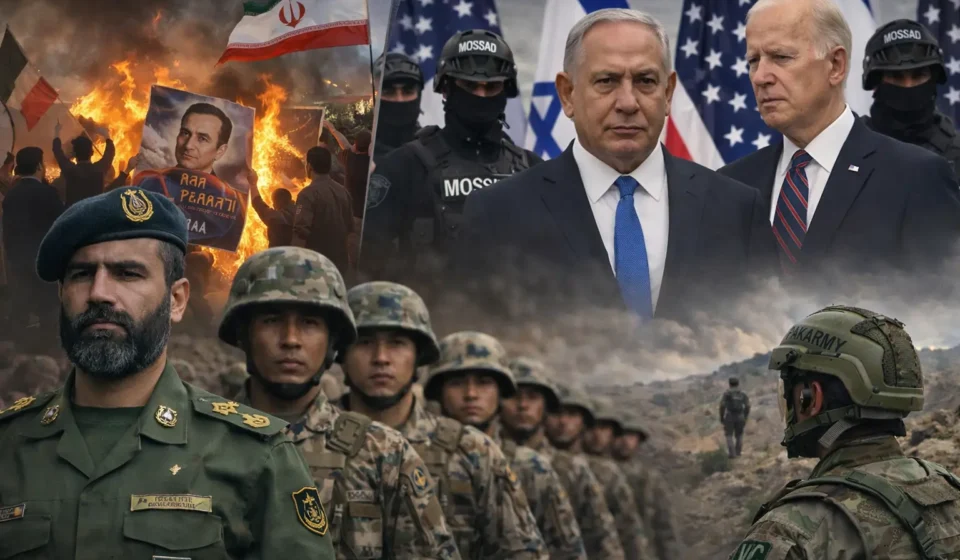
Beyond the moral argument, regime stability in Iran is in Pakistan’s and the region’s strategic interest. Any US or Israeli sponsored “freedom-loving” dictatorship would be an unmitigated disaster. Even if the current system collapses, there will be no smooth transition, especially if the Pahlavi clown is imposed. Given Iran’s layered security apparatus (IRGC and Basij) and intense ideological mobilization, the likely outcome is civil war – exactly what Washington and Tel Aviv desire.
Such a conflict would neutralize Iran as a strategic obstacle, secure Hormuz, hand over oil to US corporations, and place a knife on the throat of the relatively stable states nearby – Pakistan and Türkiye. Türkiye, having contained Kurdish militancy after decades of struggle, would see renewed insurgent pressure along a long, vulnerable border with Iran, while Iraqi Kurdistan remains firmly in the hands of US-Israeli puppets.
Implications for Pakistan
For Pakistan, the consequences are even more severe. Iranian Sistan has long served as a sanctuary for militants; instability there would sharply increase cross-border insurgent activity. Israel has made no secret of its designs on Balochistan – its think-tank ecosystem, including MEMRI’s “Balochistan Studies Project,” is openly geared toward it. Pakistan’s strategic assets in Balochistan would face heightened threat. And after painstakingly reining in sectarian militancy, any mobilizing fatwa from Iran’s supreme leadership would open an entirely new front – anyone familiar with Shia eschatology understands the implications.