
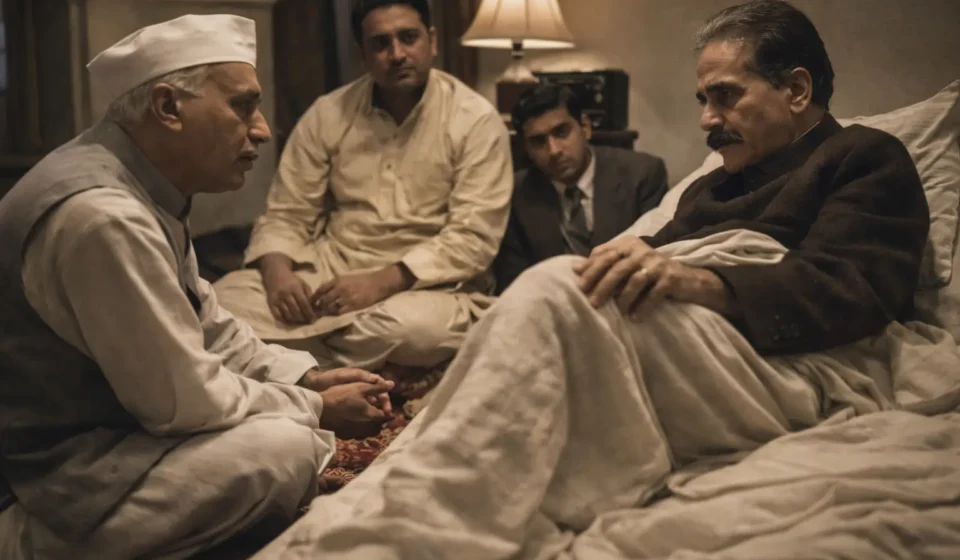

In January 1938, Pandit Jawaharlal Nehru came to visit Allama Iqbal at the 𝐽𝑎𝑣𝑖𝑑 𝑀𝑎𝑛𝑧𝑖𝑙 in Lahore, and was accompanied by his hosts, Mian Iftikhar-ud-Din and his wife. By this time a wide ideological and political chasm separated Hindu and Muslim leaders.
Iqbal had deputed his son Javid and Mian Muhammad Shafi to receive Nehru, and his entourage at the entrance of the house. Nehru was affectionate with Javid, and put his arm around him, and they entered Iqbal’s room, where he was stretched out on his bed almost half asleep.
Right in the Indian tradition, Nehru and the members of his entourage insisted on sitting on the floor as a mark of respect for the ailing and elderly poet-philosopher.
What did they talk about?
In those days Nehru was known to be the leader of the leftwing in the Indian National Congress. He viewed India’s problems, like a good Marxist socialist in poverty and general economic deprivation. Iqbal asked Nehru how many Congress leaders shared Nehru’s convictions in socialism. Nehru’s answer was about six. With so few supporters how could he then invite Muslims to join the Congress.
Then their topic of discussion shifted to Hindu-Muslim conflict. Iqbal predicted the rise in the strategic importance of West Asia, which was the core of the Asian continent. If in the Indian Sub-Continent Hindus did not treat Muslims with equity, and managed to alienate them India would spoil its relations with the Muslim states of the Middle East. Iqbal added it was to the [political] advantage of Hindus to maintain friendly relations with the Muslim population.
While Nehru-Iqbal parley was in progress, Mian Iftikhar- ud-Din asked a question on behalf of Nehru:
𝐃𝐫. 𝐒𝐚𝐡𝐢𝐛, 𝐰𝐡𝐲 𝐝𝐨𝐧’𝐭 𝐲𝐨𝐮 𝐛𝐞𝐜𝐨𝐦𝐞 𝐭𝐡𝐞 𝐌𝐮𝐬𝐥𝐢𝐦𝐬’ 𝐥𝐞𝐚𝐝𝐞𝐫? 𝐌𝐮𝐬𝐥𝐢𝐦𝐬 𝐫𝐞𝐬𝐩𝐞𝐜𝐭 𝐲𝐨𝐮 𝐦𝐮𝐜𝐡 𝐦𝐨𝐫𝐞 𝐭𝐡𝐚𝐧 𝐉𝐢𝐧𝐧𝐚𝐡. 𝐈𝐟 𝐲𝐨𝐮 𝐧𝐞𝐠𝐨𝐭𝐢𝐚𝐭𝐞 𝐰𝐢𝐭𝐡 𝐂𝐨𝐧𝐠𝐫𝐞𝐬𝐬 𝐨𝐧 𝐌𝐮𝐬𝐥𝐢𝐦𝐬’ 𝐛𝐞𝐡𝐚𝐥𝐟 𝐦𝐮𝐜𝐡 𝐛𝐞𝐭𝐭𝐞𝐫 𝐫𝐞𝐬𝐮𝐥𝐭𝐬 𝐰𝐨𝐮𝐥𝐝 𝐞𝐧𝐬𝐮𝐞.
Angered by this comment, Iqbal rose from his sleeping posture, and sat upright, and looked him in the eye, and stated:
𝐲𝐨𝐮𝐫 𝐬𝐭𝐫𝐚𝐭𝐚𝐠𝐞𝐦 𝐢𝐬 𝐭𝐨 𝐟𝐥𝐚𝐭𝐭𝐞𝐫 𝐦𝐞 𝐭𝐨 𝐜𝐨𝐦𝐩𝐞𝐭𝐞 𝐚𝐠𝐚𝐢𝐧𝐬𝐭 𝐉𝐢𝐧𝐧𝐚𝐡. 𝐈 𝐰𝐚𝐧𝐭 𝐲𝐨𝐮 𝐭𝐨 𝐤𝐧𝐨𝐰 𝐭𝐡𝐚𝐭 𝐉𝐢𝐧𝐧𝐚𝐡 𝐢𝐬 𝐭𝐡𝐞 𝐫𝐞𝐚𝐥 𝐥𝐞𝐚𝐝𝐞𝐫 𝐨𝐟 𝐭𝐡𝐞 𝐌𝐮𝐬𝐥𝐢𝐦𝐬, 𝐚𝐧𝐝 𝐈 𝐚𝐦 𝐨𝐧𝐞 𝐨𝐟 𝐡𝐢𝐬 𝐟𝐨𝐨𝐭 𝐬𝐨𝐥𝐝𝐢𝐞𝐫𝐬.
Then Iqbal went silent, and the room was filled with palpable tension. Nehru realized that Iftikhar-ud-Din’s uncalled for intervention in the Nehru-Iqbal dialogue had spoiled Iqbal’s mood. Any additional conversation would be counterproductive. Nehru rose from the floor, and bid farewell to Iqbal.
Reference:
Hafeez Malik, Iqbal in Politics