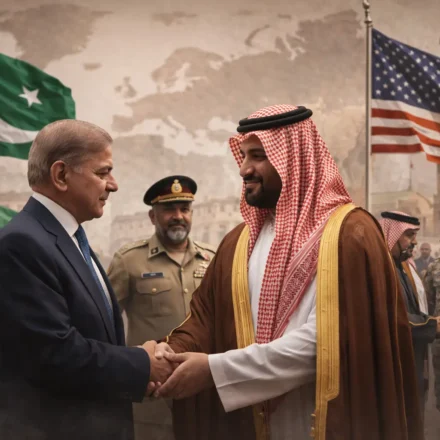

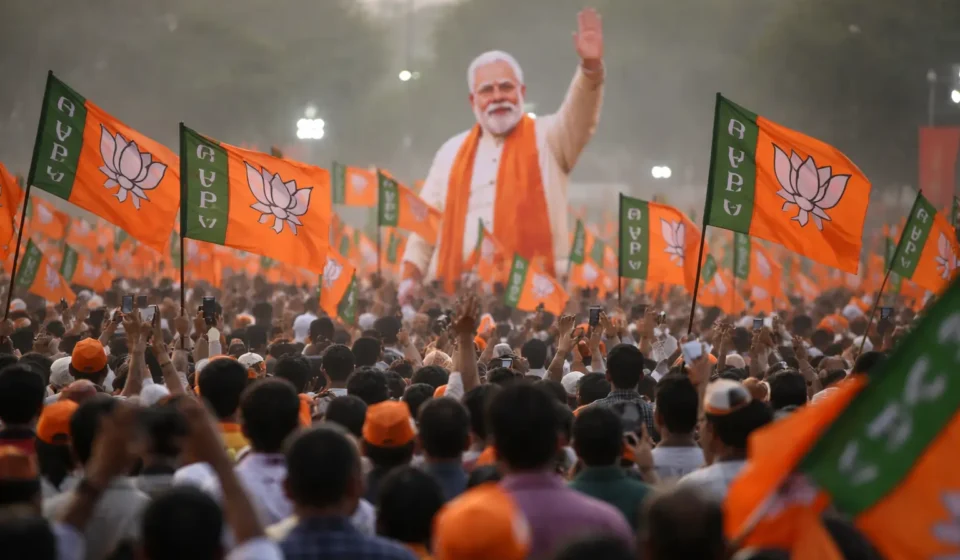

Elections in India are no less than a revolution. When election days starts in India, the political landscape changes, it changes into a people-oriented, and developmental model approach. This transformation, has become dominant, especially under the rule of the Bharatiya Janata Party. When the elections are near, BJP’s political language becomes more cultural oriented or sometimes becomes more biased only to gain political advantage. It has been noted that this is a part of deliberate strategy designed to harden the electorate along ideological and religious lines.
Table Of Content
A Vintage Communal Script Ahead of Big Polls
Election season in India typically means an increase in emotionally rife speeches and campaign slogans. This points to a pattern which the months leading up to the 2019 general election in India where BJP has systemically induced several measures relating to hit people emotionally.
Recently in 2019, this has even intensified after 40 paramilitary soldiers killed during the Pulwama Attack in February. The losses were coverted into sympathetic campaigns which were then utilized for gaining votes.
The continues pattern of Nationalism is always present in the political discourse in campaign activities, on the television, and especially on social media. The people who opposed the politics defended the political discourse because it was seen as a collapse of the political discourse, and the some of the people were convinced under the populist behavior wore by BJP. However, the fact was opposite and people realized this later.
The Politics of Shifting Narratives
In 2019, the BJP proposed the Citizenship Amendment Act, which was yet another alarming political and important issue. The Act provided provisions for easier citizenship for non-Muslim minority groups from neighboring countries to India, such as Pakistan, Afghanistan, and Bangladesh. The proponents of the Act defended their position on the Act as a violation of the provisions of the Constitution of India that established the notion of Secularism because it was viewed as a violation of the provisions of the Constitution.
Protests sprung up across the country from the first retraction. Civil groups and citizens from Delhi all the way to Bengaluru were protesting. India has witnessed plenty of civic protests in the past, and many reporters compared this to them. Protestors held hundreds of rallies across the country. However, this was met with changing the narrative of people with Pulwama and hatred against Pakistan.
The Figures behind Polarization
Statistics provide another view of how the political climate has changed. A report published last week, in the Association for Democratic Reforms found that almost 43 percent of the members elected to India’s parliament in 2019 had declared criminal cases against them (including several involving allegations relating to communal tensions or inflammatory speech).
At the same time, rapidly growing digital platforms have changed the way an election’s story gets dispensed. Political messaging spreads now, at the click of a button, from social media posts and videos to messaging apps, to millions of voters within minutes.
Such is the digital ecosystem we inhabit, in which emotionally illustrative narratives can be propelled to greater virality more often than factually grounded discourse regarding governance or policy.
The Strategic Calculation
Political operatives immediately see a basic truth: Messy emotions stir up voters more quickly than technical discussions about the specifics of policy.
Economic reform or infrastructure spending rarely inspires the same fervor as major narratives about religion, culture or national pride. In a sprawling, diverse country like India, those narratives are useful to political parties as they can bring vast swathes of the electorate together under one umbrella identity.
Because parties that need a decisive electoral victory can make this strategy appear to work. But opponents say that the same tactics could exacerbate society’s divisions.
The Damage Done to India’s Democratic Fabric
India claims to be the world’s largest democracy, with more than 960 million eligible voters. The elections in India are held in a pluralist system, recognizing the co-existing presence of various religions, languages, and cultures.
India’s elections also include a variety of different campaign methods, many of which include the targeting of certain groups. Many India watchers are concerned of the consequences of this type of election. Both may be fleeting, but the social scar tissue of polarization will endure much longer.
Looking Ahead
The debate on demonetisation is bound to remain alive as India enters into future electoral cycles. Some insist that powerful nationalist rhetoric simply captures real public sentiment while others wish the political arguments on offer could return to issues about jobs, education and economic growth.
Yet elections, no matter how staggering are not what shape Indian democracy into the years ahead; it is what the government do after them which is now a days, very disappointing, and whether the tussle for power destroys the pluralist fabric on which our country was founded.