The Pahalgam Attack: A False Flag Operation and India’s Role in the Blame Game

There have been many controversies surrounding the attack at Pahalgam, Jammu and Kashmir that occurred on 22nd April 2025. In fact, the controversies have been so deep that they have even thrown a doubt on the very nature of the attack and the affidavits that were filed against Pakistan. India was the first one to accuse Pakistan-based militants for the assault. However, till date, no convincing evidence has been presented publicly. This article investigates the possibility of the Pahalgam attack being a false flag operation which India staged itself so as to advance its own political agenda, demonize Pakistan and have a pretext to retaliate militarily.
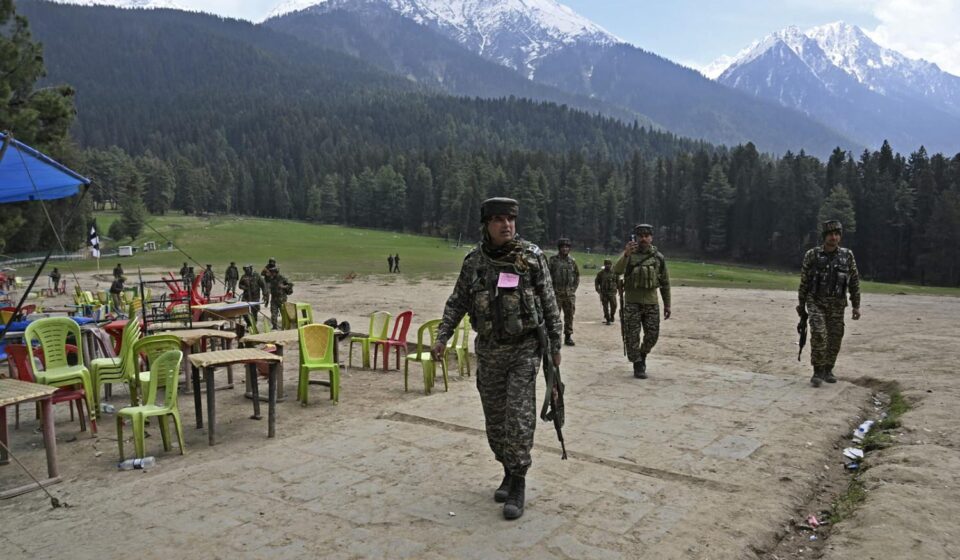
On that terrible day, 26 people, including some foreigners, were killed after armed militants reportedly started shooting in this beautiful Pahalgam which is one of the top tourist spots of Jammu and Kashmir. Right from the outset, Indian authorities pointed to Pakistan-supported militants and identified groups like Lashkar-e-Taiba as the culprits responsible for the tragedy. However, the very fact that the militants could effortlessly enter the highly secured area, coupled with the various conflicting accounts of the incident, really make one question whether India’s narrative is truthful or not. No Evidence Has Been Presented That Pakistan Was Involved The main problem with India’s accusations against Pakistan is that the last time Pakistan was blamed there was a lack of solid evidence. Apart from identifying the attackers as Pakistan nationals or members of Pakistan-based terrorist groups, no concrete evidence was presented. Actually, some other parts of the story were even contradictory. For example, it was claimed at first that the militants were killed in the operation but later, a video appeared showing that some had survived which made people question the official death figures and the facts of the attack. Besides, it is very doubtful how Indian authorities were so confident to blame Pakistan without even a single piece of strong evidence. In a way, this shows how allegations against Pakistan were made very easily without any factual proof. Apart from a few random accusations thrown in the last couple of years, the two major ones that would bring up Pakistan’s blame are the 2008 Mumbai attacks and the 2016 Uri attack. India has blamed Pakistan for these incidents but has failed to produce evidence that clearly links Pakistan with these acts. Turning False Flag into a Point of occasion it is difficult to consider India’s reaction to the Pahalgam as just another attack because even if you are only comparing how national governments handle military matters or how they use political vulnerabilities of enemies to get stronger positions, India is on top of the world. India has done false flag operations deliberately in the past as a way of coming up with reasons for military intervention or turning their enemies to come around to their way of thinking. The biggest of these may be the 2001 Indian Parliament attack that first blamed Pakistani militants. But these claims have obviously raised major doubts and some have even argued that the entire incident was staged by the Indian side as a cover for military escalation.
Similarly, the 2019 Pulwama attack, which led to the Balakot airstrikes, saw India once again accusing Pakistan of being behind the attack without presenting solid evidence. In both cases, the Indian government used the attacks to fuel nationalist sentiment, garner political support, and justify aggressive military attack.
There are many reasons India may have indeed carried out or at least made the Pahalgam attack to blame Pakistan. First of all, this attack came at a time when India was facing a lot of domestic and international pressures on its Kashmir policy, particularly after the removal of Article 370 and the unrest that followed in the region. Therefore, by accusing Pakistan for the attack, India could shift the narrative from its own controversial policies in Kashmir to Pakistan as a “terrorist state.” Secondly, the Pahalgam attack was almost in time with the Indian general elections and therefore the factor of political benefits cannot be dismissed. The ruling party BJP has been constant in exploiting the issues of national security, particularly the Pakistan threat, as a means to win votes. After the Pahalgam attack was blamed on Pakistan, BJP managed not only to show itself as a protector of national security but also to rally its voters and at the same time put the opposition parties in a bad light.
India’s continuous deployment of military forces in Kashmir and the operation against so-called terrorist elements may be related to one of the objectives of the Pahalgam attack. Simply put, that incident can be interpreted as a justification to intensify the military actions and the clampdown on the separatists in Kashmir by blaming Pakistan. The Pahalgam attack is just one part of the bigger story of New Delhi-Islamabad relations, which have been hostile mostly due to the Kashmir conflict that has even taken the two sides to war, skirmishes, and proxy wars. Pakistan has in fact always denied any links with attacks on Indian territory and has regularly demonstrated its willingness to have a dialogue for the peaceful resolution of the Kashmir issue. India, by blaming Pakistan for the Pahalgam attack, tried to present itself as a victim of cross-border terror and divert the attention of the international community from its own controversial actions in Kashmir.
The Pahalgam attack raises very serious questions about whether India played a role in the incident by staging or manipulating the situation in such a way that political and military objectives of the state could be achieved. Things considered, the facts do not support the claim of Pakistan’s involvement in the attack. In fact, India’s penchant for staging false flag operations on the one hand and lack of any evidence on the other hand, strongly point to the possibility that the attack was a part of a larger plan to malign Pakistan and provide justification for military action. That is why the international community must continue to be watchful and insist on independent investigation of the incident so that the truth can be unveiled and the culprits can be brought to justice. The tragedy at Pahalgam must not be exploited for political gains. On the contrary, it should serve as a catalyst to the region’s problems of conflict and unrest.