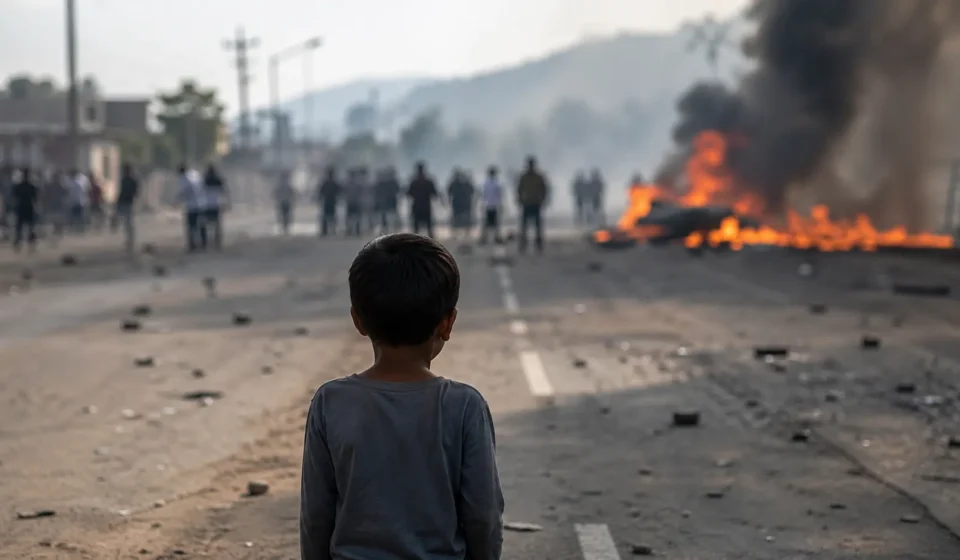

A noticeably different sight was visible in Manipur where fresh violence was again bringing into focus ground realities behind the popular speeches on governance and democracy during election campaign in West Bengal made by PM Narendra Modi who went to campaign for elections in the state confidently about considering political victory. Political Rhetoric vs Ground Reality. During the campaign, Modi stated that ‘people of Manipur were suffering’ under the reign of the All India TMC&54. He called to turn out in elections, to show the BJP’s strength in the democratic process. Even as allegations such as these, in to the election, the scenario in Manipur was revealing on a contrasting note where the very government failed to ensure the fundamental security to its citizens.
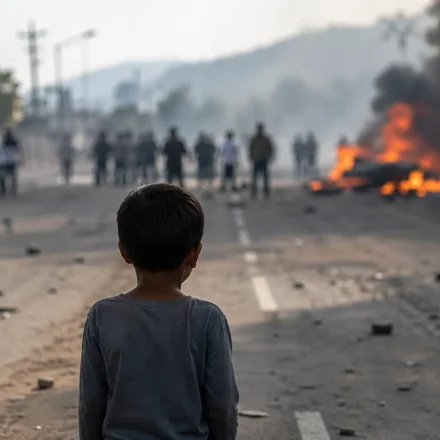
Children have been killed under BJP and no steps have been taken to resolve the issue despite many demonstrations and calls from communities for justice. The situation in the state has been volatile for almost 3 years with conflicts between the majority Meities and a Kuki minority in over 250 lives. Another disturbing aspect is the renewed firing exchanges between the Naga and Kuki groups. The latest firing exchanges are ‘not isolated, ‘ but a part of the ‘long-standing crisis of deep mistrust, weak conflict resolution, and a lack of protection for affected populations.’
The Question of Consistency
Absolving the use of violence by stating “violence has no place in a democracy”, Modi’s comments were directed at a shooting incident at the White House Correspondents’ Dinner in the United States, but the continued violence in India particularly in the context of Manipur comes across as hypocritical.
While addressing violence internationally, failing to prevent or solve the problem safely in the home country perpetuates the perception gap. All communities living through this insecurity and fear know that words are not enough.
A Deeper Structural Issue
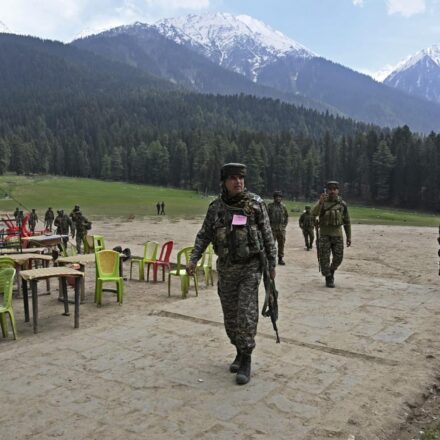
The unrest in Manipur is not an isolated phenomena but echoes an deep underlying structural problem ethnic cleavage, political alienation and the lack of adequate governance. Persistent dependency on security measures instead of political solutions has proved ineffective to find a permanent agenda for peace.
Furthermore, continuous rounds of protests and repressions may ultimately establish the normalization of instability, where violence and chaos become almost inevitable. Democratic strength in India is constantly gauged through voters, s participation in elections. But the real challenge is maintaining peace, justice and equitable protection of all in places that are crisis prone.
The above mentioned cases of Manipur embody the insufficient argument of the electoral story prevailing over that of the fringes. The West Bengal-Citizen-Manipur connection highlights the need of translating words into action. Rhetoric will not preserve democracy it entails addressing conflicts at their core with transparency, accountability and pragmatism. Until then, voices from places such as Manipur will keep asking whether they are all part of an inclusive democracy projected on the national altar.
An Urgent Need for Political Will, Not Just Policing
What we see at the end of the day is that Manipur is not just a crisis of security, but of sustained political discussion. Unless there is a greater reliance on political solutions, on measures of confidence building, on sitting together and having negotiations, and on peace pathways that are not just about containment. this is far from over. Unless there is a genuine will to resolve all of the political issues that has caused this and all subsequent episodes, the crisis will continue to trigger its cycle of violence and shatter whatever little faith remains in the country.